Casting Director Yaroslava Evtushenko
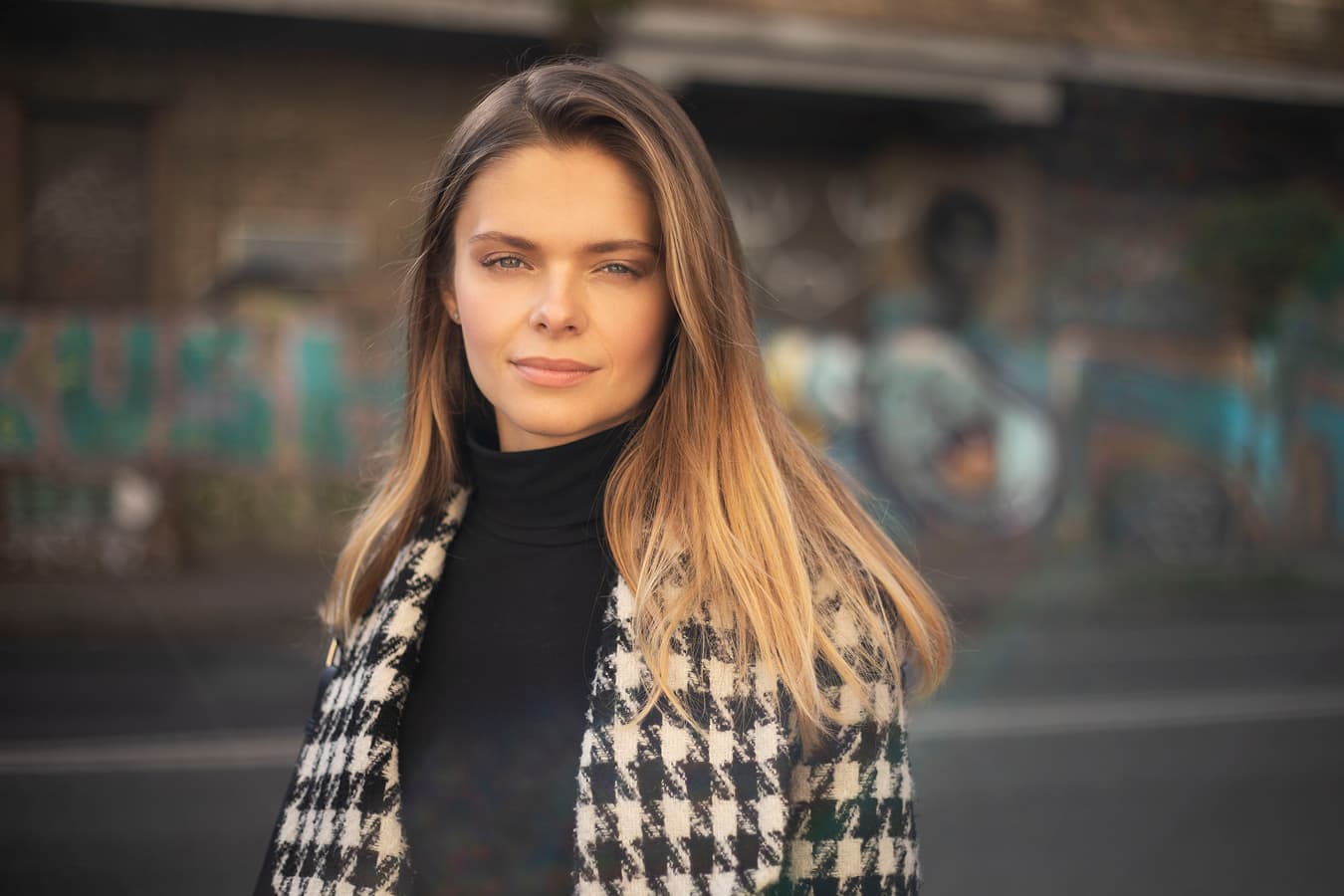
-
– How did you enter the profession?
Since childhood, I dreamed of working in cinema. My father is a producer, and I eagerly accompanied him to film sets. It seems my love for cinema is in my blood. I was mesmerized by the work of camera operators, who seemed like magicians with their equipment, creating beauty through their craft. Even now, I view some cinematographers as wizards. While directors are crucial, to me, the person behind the camera is indispensable to filmmaking, whether it’s fiction or documentary.
Звісно, з захопленням я дивилась і на акторів. Я думала: «Пощастило дівчатам, які працюють асистентками з акторів». Для мене це було справжньою подією, якщо можна було зайти у гримвагон і поспілкуватися з кимось із акторів. Я дуже соромилась, тому ніколи не просила автографів. Ну, хіба що у кількох людей, які для мене були рівня «вау». Наприклад, Даня Страхов. Коли він приїхав до Києва, тато покликав мене з собою на зйомки, а я впала в ступор — цілий місяць знаходила відмазки, аби не їхати — настільки це було хвилююче. Я тоді була мала — 12 років, і вела зошити, в які вклеювала вирізки з журналів із фотографіями акторів. Я досі дбайливо зберігаю свої архіви. Зараз жартую, що це була моя перша кастинг-база (усміхається).
I was also fascinated by actors and admired the assistants who worked with them. It was a significant event for me to enter the makeup trailer and interact with actors. I was very shy and rarely asked for autographs, except from a few who were particularly impressive to me, like Danila Strakhov. When he came to Kyiv, my father invited me to the set, but I was so overwhelmed that I avoided going for a month. At 12, I kept notebooks where I pasted magazine cutouts of actors’ photos. I still cherish these archives and joke that it was my first casting database.
At 17, during a visit to a film set with my father, I wanted to contribute. My father asked casting director Natalia Borovykh if she needed assistance. She entrusted me with the important task of delivering a fee to Georgy Deliev. Nervously, I completed this first assignment in the film industry. I enrolled at the Karpenko-Kary University. That year, there was no intake for screenwriting, so I chose film studies, not fully understanding the specialty. Until 15, I aspired to study film directing, but I felt I had nothing significant to say to the world and decided to pursue directing later if I matured into it. Being a director requires a deep understanding of the world and oneself, which I felt I lacked at 17.
I hoped to learn writing and become a professional film critic. However, the initial months were disappointing. We lacked a class schedule for the first two weeks, and the curriculum, especially in film criticism, was unclear. I was accustomed to a rigorous schedule in school, balancing classes and extracurricular activities, which instilled responsibility in me. After the first year, I realized I couldn’t waste time and asked my father to help me find a role in a film crew, perhaps in costume. He connected me with artist Tamara Demchenko, who immediately had me seam-rip a wedding dress. Despite never having used a seam ripper before, I got to work silently. I consider Tamara my guide and godmother in the film world. After meeting her, I began my own path, separate from my father’s projects.
On my first film shoot a decade ago, I felt transported to a parallel reality that captivated me completely. I realized I wanted to work on set, at the heart of the action. I didn’t plan to become a costume designer, so I tried being a clapper loader. Initially, I was nervous and confused by the multiple cameras. Once I adapted, I remember reading Remarque’s “Arch of Triumph” over three shifts in a pavilion, sitting on an apple box between takes.
I was intrigued by the work of focus pullers, mechanics, gaffers, and especially camera operators. However, on one project, I noticed I was the only woman among thirty men in the shooting room, prompting me to consider a change. Soon after, I was offered a position as a casting manager for the series “25th Hour,” with Vika Nesterenko as the casting director. I’m grateful to Vika for trusting me to manage the project independently, allowing me to fully grasp the responsibilities of working with actors and managing schedules.
Subsequently, I worked as an assistant to Lena Prilipko and Yana Bernatskaya, through whom I met many actors, not only from Kyiv. I began working as a casting director in 2016. My first project was a 20-episode series for 1+1, where I met Lena Shevchuk, which led to a lasting friendship. The project was challenging, with no assistant, a large cast, and frequent changes. Lena and I often left the office late at night. Concurrently, I assisted Dima Komarov on “The World Inside Out.” Having known Dima for a while, I couldn’t refuse his request for help. I juggled both roles, working between Dima’s office and the producers’ office, managing tasks like Figaro, the servant of two masters.
-
– You’re no longer a casting director. Why did you stop?
I primarily worked on melodramas with implausible plots, which became emotionally draining. When offered another project, I read two of the four episodes, became emotional, and declined. I told the producer I didn’t want to work on such content. The film industry demands 24/7 commitment, often at the expense of personal life and health. Despite the hard work, the financial and moral rewards were lacking. Payments were delayed, making it feel like I was always working on credit. I grew tired of this cycle.
Casting should be a creative process, involving collaboration with the director to assemble a strong ensemble. However, tight deadlines and budget constraints often reduced casting to filling roles based on availability and costume sizes, rather than talent. Even for background roles, I aimed to cast properly, as the supporting cast enhances the lead’s performance.
I began questioning my purpose in the industry. Creating the illusion of working in cinema isn’t fulfilling. Cinema is an art form, and I want my contributions to be meaningful.
-
– When did you decide to leave?
– One morning, while preparing for work, I told myself, “It’s time to become a producer, preferably a creative one.” A week later, my acquaintance Ira Khranovska, a producer at ICTV, asked if I could recommend someone for an assistant position. I recommended myself. I admired Ira’s professionalism and her commitment to elevating our television series. I became her assistant and was eventually promoted to creative producer. Now, I see the bigger picture of serial production. While the role has its challenges, I see potential for growth, which is crucial for me. Without prospects, I lose motivation.
-
– Would you return to casting?
– If the project were exceptional, yes.
-
– What’s your dream project?
– A feature film (not that I have anything against series, but this is a dream). A story that resonates with me personally. It doesn’t have to be grand or technically perfect, but it should be kind, uplifting, and leave the audience with positive emotions and thoughts, making the world slightly better.
Genre-wise, I can’t specify. I’m inherently drawn to drama, psychology, esotericism, and reflections on life. Melodramas aren’t my forte. Since childhood, I’ve viewed certain film moments cynically, understanding the behind-the-scenes processes and recognizing cinema as a form of illusion.
I recall Vampilov’s “Elder Son,” which I adore. His stories are simple yet honest and relatable. They don’t rely on special effects or action but touch the audience’s soul. Achieving this balance between form and content is challenging. Films should convey meanings and human values.
-
– What is your dream project?
– A feature film (I have nothing against TV series, but this is truly my dream). A story that touches me personally. It can be a simple story, not necessarily spectacular in terms of cinematography, but it should be kind, bright, and give the viewer a good emotion, a positive thought, and make the world just a little better. As for the genre – I can’t say for sure. By nature, I’m a drama person. Psychology, esotericism, reflections on life – these are close to me. Melodramas are not my thing. Since childhood, I’ve had a slightly cynical view of certain moments in films because I know how they’re made and I understand that cinema is a kind of deception (in other words – pure illusion).
I just remembered Vampilov. I adore his play Elder Son. His stories are very simple, but they are sincere and full of life. You don’t need special effects or action scenes. Just tell a story that resonates in the viewer’s soul – that’s what’s really powerful. But of course, that’s far from easy… Often there’s a race for spectacle. But what’s really needed is a balance between form and content. Films should convey meaning and human values.
-
– From the producer’s perspective, how are actors approved?
– There’s a character and personality outlined in the script, and that has to meet the expectations of the audience (each TV channel’s audience has its own preferences when it comes to character types). There’s also a focus on media presence, to attract attention. If it’s the lead role – a more famous actor is usually needed. Or if the actor is less known, they need to be surrounded by “stars.”
When I worked as a casting director, I was always surprised at how rarely and reluctantly producers from production companies would answer the question: “Which channel are we shooting for?” But that’s super important. A casting director needs to understand the direction in which to think.
More and more, I’m convinced that ideally, scripts should be written with a specific actor in mind. When you know their traits, charisma, habits – you can tell what will look organic and what won’t.
-
– What would you advise our actors?
– Work on yourself. Grow in every possible way. The more conscious a person is in life, the better they understand themselves – their psyche, their physicality – and the more control they have over it. It’s important to read good books, watch quality films, and learn various skills.
An actor needs to define for themselves what kind of roles they want to play. If it’s tough guys who fight well – you need to stay in shape: take up hand-to-hand combat, go to the shooting range, lose the beer belly, and build some muscle. If you want to be a heartthrob – take better care of your appearance. The body is an actor’s instrument. What they can do and how they look will define the roles they get.
It’s crucial to study languages. For example, I often come across Ukrainian actors who don’t speak proper Ukrainian. And we’ll have more and more projects filmed in Ukrainian… And “non-speaking” actors – that’s a real problem. If you dream of acting in foreign films – learn English. It’s like the lottery – “first, buy a ticket.” You have to set goals and take steps toward them, one by one.