Casting Director Yana Bernadska
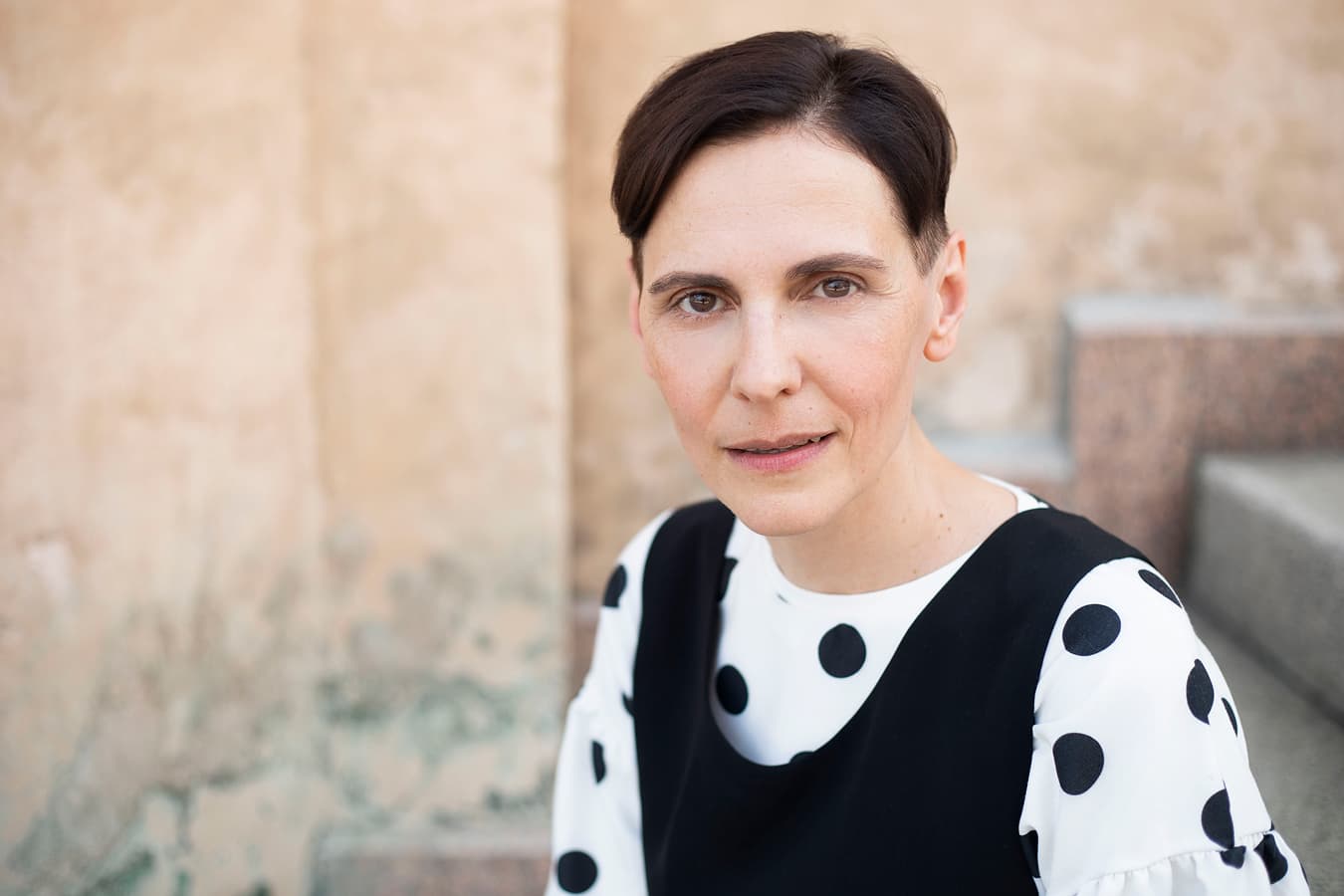
-
– Tell us, please, where are you from?
– I’m from Kyiv, though my father was in the military, so I was born in Germany, lived in the Czech Republic, changed six schools, and eventually returned to Kyiv.
-
– Where did you go to study after school?
– I enrolled at the Faculty of History at Taras Shevchenko National University of Kyiv, studied for a year and a half, and was expelled in my second year. After that, I spent six months doing nothing. Then my friends started telling funny stories about the Theatre University. My brother had graduated from that institute, and I thought: why not? I applied to the Karpenko-Kary University and graduated with honors.
After university, I got married, had a child, and went on maternity leave for a while. One of my classmates at the university was Alla Samoylenko. We became friends, sat at the same desk. Alla had kids before I did, so when my daughter grew up and went to kindergarten, I started occasionally helping Alla. My first job with her was casting for a New Year’s commercial — I had to invite actors to audition for the role of Father Frost.
Later, when Alla had too much work, she asked me to read with the actors at auditions. And then unexpectedly, Stanislav Boklan, Viktor Saraykin, Vitaliy Linetskyi, and Ihor Tykhomyrov came in — it was a strong male cast. I read scenes with all of them, and at the end, the director said: “Come to the set with me.” I initially refused — it was right before the May holidays, and I already had tickets to Lviv. But the director insisted. To say I didn’t understand anything on set is an understatement, but Volodya Yanoschuk supported me, never raised his voice, patiently answered all my questions — I’m still grateful to him. And of course, I’m always grateful to Alla — she’s the one who brought me into the profession. I’m endlessly thankful to them both for launching my career.
And, of course, a huge thanks to the producers at Pronto — Max Asadchy and Serhii Lysan — for hiring a girl with no experience. Then I joined Fresh Production not as an actor’s assistant, but as a casting manager. My senior colleague handled the lead roles, and I worked with supporting roles and extras.
Then one day Volodya Tykhyi approached me with a proposal to take on a project from scratch. I wanted to decline because I had never worked with Moscow-based actors before and didn’t understand the nuances of dealing with agents. But Volodya convinced me, saying: “Everyone has to start somewhere.” Producer Ivanna Dyadyura supported me, constantly encouraged me: “Don’t sit still, grow.” Together we made two films — “The Button” and “My Little Daughter” — and that’s when things really took off.
One day, while I was vacationing by the sea, a colleague called asking me to substitute on a project at Film.UA — I agreed. That’s where I met director Volodya Melnychenko. Somehow, all the best men in my life have been named Volodymyr. The script was ordinary, the budget small, but I wasn’t discouraged — it was a new experience, and I decided to give it a shot. I ended up working at Film.UA for 12 years. I was never on staff — it’s just that most of the projects I worked on were filmed there. From that small series, we formed a big team of amazing people, and together we accomplished a lot. That became possible because the producers — V. Mirsky, V. Issat, S. Demidov, S. Morozov — never treated us with a “I’m the boss — you’re the fool” attitude. In my life, random things often turn into long-lasting stories. I never planned anything: I didn’t dream of working in film, I just loved cinema. I graduated from the film studies department simply because I needed a degree. That’s how it all came together.
-
– Was there a project that changed you?
– There were many good projects. For sure, some didn’t exactly change me, but they impacted me with their originality. A few had amazing scripts, a few had very interesting directors who changed my perspective, shaped my taste. Because as casting directors, we don’t think in terms of actors — we think in terms of characters. I can love an actor and think they’re brilliant, but I won’t cast them in every project because they represent a specific type. When I read a script, a casting picture forms in my head immediately. But some directors are capable of completely changing that vision. These are the masters — they explain the material in such a way that they become a true guide between the screenwriter and me. My mental image shifts 360 degrees. That’s what great directors do. But such moments are rare.
-
– How do you communicate with directors?
– When I read a script, I’m usually ready to meet the director and suggest some options, but it’s just my vision. So I always start with the question: “How do you see it?” Sometimes we see the material completely differently. But I always remember — it’s not my film, it’s the director’s. Of course, I’ll defend my choices and still invite the actors I think are right, but the final word is always the director’s and producer’s. Ideally, decisions are made collectively and the casting director’s opinion is heard. If not — then it’s a producer-driven film, and I no longer feel responsible for the outcome.
-
– How many actors do you typically suggest for a role?
– I do large photo selections — not just three or five people. The exception is when we’re looking for something truly unique and can’t consider 20 candidates. But usually, I show many actors. Nowadays, self-tapes are more common. But sometimes directors don’t want to watch many tapes — then I invite a few actors for in-person auditions.
-
– How do you feel about self-tapes?
– I have mixed feelings. Some actors know how to film great self-tapes and don’t complain about having to be the director, editor, and lighting technician all at once, not to mention buying the gear. But I also understand those who are unhappy — it is costly. Still, the whole world is moving online, and I think we have to treat it as just another part of the job — whether we like it or not. Personally, I love live auditions — that’s when actors can truly surprise you. It’s a great chance to reveal something unexpected. With self-tapes, nothing distracts, and actors can present their vision of the role, but they miss the live exchange with the director. On the other hand, it’s a useful skill — a new tool for life. Every format has its pros and cons. As my daughter says: “You have to be open-minded and flexible.”
-
– Have you ever been deeply impressed by an actor at auditions?
– Yes, it happens. An actor or actress walks in — you’ve seen them in films, in theatre, they’re professional and respectable, but there’s no spark. And then — maybe the director says something, maybe the actor finds the right tone — suddenly you’re moved to tears. Or an actor confesses love in a scene so convincingly that you’re already imagining a ring on your finger. I call these moments “the magic of cinema.”
-
– Do you have any professional fears?
– I’ve honestly never thought about it. I don’t want to say cliché things like being afraid of not closing a cast or not meeting expectations. Sure, there are concerns — but everything is solvable. You can always talk it out, find a compromise. If it doesn’t work out — it doesn’t. I always do my best. And if someone decides to work with another casting director — I’m okay with that.
-
– What if an actor doesn’t show up?
– I call that “assistant panic.” Even now, with about fifty projects behind me, every time auditions start, I worry — what if I forgot to text someone? What if I missed someone? Then everyone shows up — and the panic passes.
-
– Do you have an actor database?
– I started building it a long time ago. Mostly, it’s in my computer — everything sorted into folders: men, women, by age, by city. Then it got too big, so I moved it to a drive — which eventually burned out. Some I keep in my head. But now, my main database is Facebook.
-
– Do you work on “closed” projects?
– I wouldn’t call them “closed.” It’s more that I don’t post about them. Usually, I already know who I want to invite and call them directly. I rarely post in casting groups.
-
– What do you dream about?
– I want the people I love to be healthy. I want peace in the world — truly. Many of my friends have been in hot spots, and I’ve seen how they return. You wouldn’t wish that on anyone. I sincerely hope there are no religious or political wars. None at all.
-
– If you had a superpower, what would it be?
– My superpower is being able to walk outside without makeup, in any state, at any time. I’m the daughter of a regiment commander — I get ready in fifteen minutes.
-
– What are your hobbies?
– I don’t cross-stitch, sadly, and I can’t draw — wish I could. I don’t play any musical instruments, but I’d love to learn — especially piano. And singing.
-
– What did you do as a child?
– The usual stuff: dance, skating, a bit of volleyball. Like every Soviet kid — a little bit of everything and nothing seriously.
-
– What did you want to be as a child?
– A truck driver. I just loved big trucks and thought there was nothing better than sitting in a huge cab, driving thousands of kilometers with music, seeing countries and people. I didn’t think about how hard and dangerous it was. But I do have a license — just need to buy the truck.
-
– What object would you associate yourself with?
– Scales. First, I’m a Libra by zodiac. And second, I constantly have to make decisions, and I want those scales to be balanced. Not tilted toward good or evil — just balance. That’s the best version of me in object form.
-
– If you caught a goldfish, what would your three wishes be?
– First — $990,000 to buy my daughter Marta the penthouse of her dreams. Second — that everyone is healthy, has a job they love, and can live a full life. Third — for myself: a small house on Cap d’Antibes in the town of Juan-les-Pins. I think I’d be even happier there than I am now.
-
– Is there a dream project you’d like to work on, or have you already?
– I’m just not the kind of person who dreams. Seriously. I never dreamed of a wedding dress or a dream project or a grand mission. What I need either comes to me or doesn’t. I don’t dream, and I don’t get upset. The best project will either find me or it won’t — and that won’t change my life. I’m happy here and now. Alla Samoylenko, for example, has a mission — to make great films, discover new faces. My mission is to do series well. Whether it’s a feature film or a TV show — I will always do my job honestly and well.
-
– Do you have a favorite author?
– Of course. W. Somerset Maugham — especially his novels “Theatre” and “The Moon and Sixpence.” His writing is so unique — no complex sentences you forget halfway through. I don’t like that kind of prose — it’s hard for me. Maugham’s style is concise and deep — there’s real magic in that simplicity. I also love Gabriel García Márquez’s “One Hundred Years of Solitude.” It’s therapy for me — I’ve read it about a hundred times. I never remember who’s related to whom, but it doesn’t matter — I just can’t stop reading. And probably J.D. Salinger’s “The Catcher in the Rye.” It was the first book I started reading to my daughter. I also love Truman Capote’s “In Cold Blood.” It’s a masterpiece. Anyone who wants to write documentary-style novels should read it.
-
– What writer do you associate yourself with?
– If anyone, then Jerome K. Jerome. I think we share an ironic sense of humor. I love laughing at myself.
-
– Your favorite movie?
– I adore Wes Anderson’s “Moonrise Kingdom.” All of Jos Stelling’s short films — I’d love to shake his hand someday. He creates 15-minute masterpieces. But my all-time favorite is “Love Actually.” I rewatch it every Christmas. From TV shows — my latest love is “Mare of Easttown.” A totally grounded plot, but the genre is spoton, the acting phenomenal, and the tension lasts from episode to episode. I binged it in two nights. And “Pulse” is very dear to me — made with great love by the whole team. The actors were wonderful. Big thanks to producers Yevhen Oleksov, Olha Maksjuk, and director Serhii Chebotarenko for inviting me to that team.
-
– What advice would you give to actors?
– Two things. First — as they say: you can fool anyone but yourself. When an actor is alone, they must honestly ask themselves: “Is this the profession I can’t live without?” Because if you can live without it — then don’t do it. Acting is patience, hard work, and then talent. Sadly, no one teaches that in drama schools. Actors work not only with their minds, like scientists, or with their bodies, like athletes — they work with everything — body and soul. It’s exhausting. I could never be an actress. Those who enter this profession to create something meaningful, not for quick money or fame — they’re brave people. Second — accept it and keep developing. Patiently wait for your moment of recognition — it will come. For example, Leonid Bronevoy, who played Müller in “Seventeen Moments of Spring,” got his first film role at 50. He waited. He didn’t give up, didn’t drink himself to death, didn’t quit. I’m sure he had those thoughts. Success is different for everyone — some get it at 16, others at 70. But it always comes to those who know how to wait.