Casting Director Tina Braganets
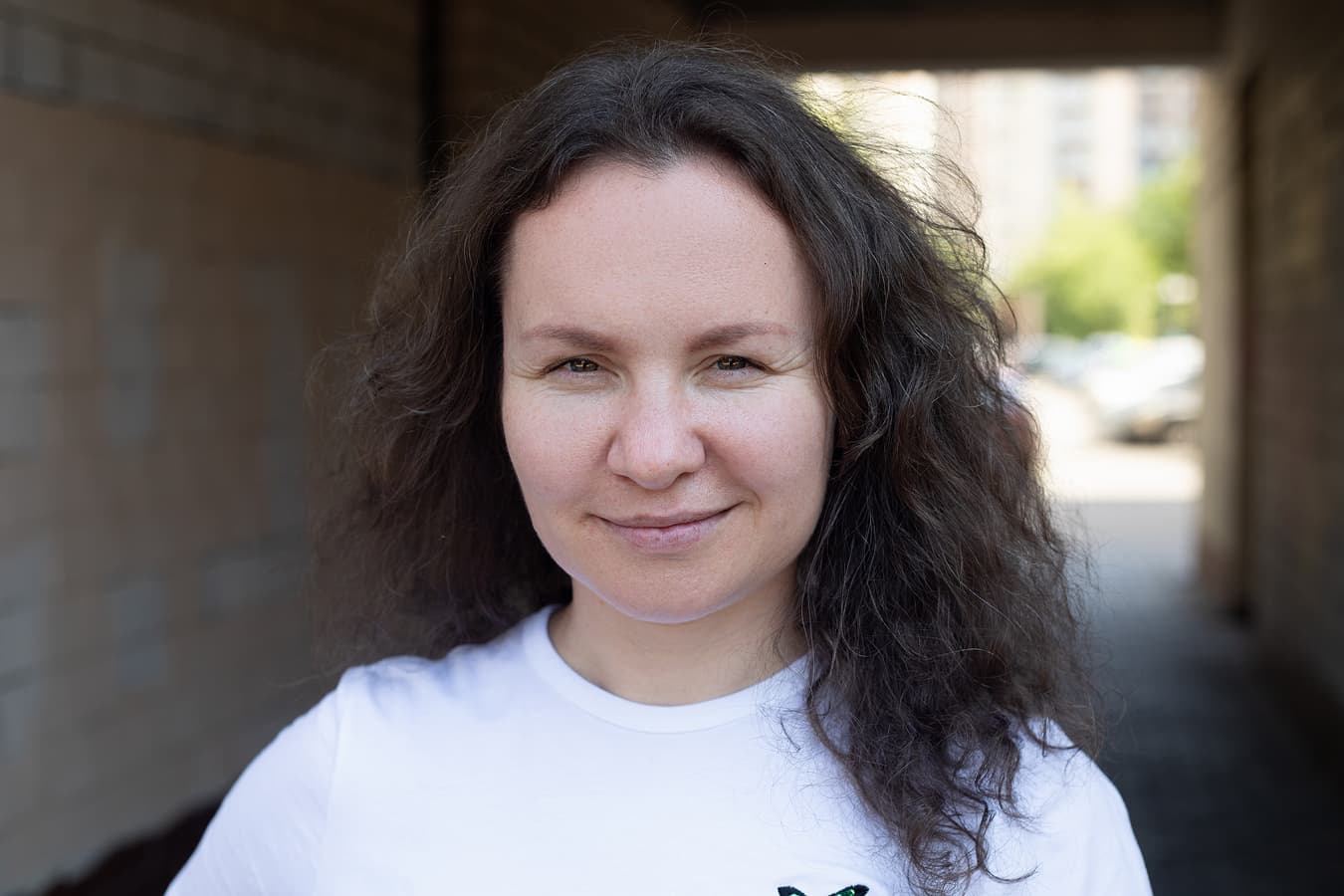
-
– Tina, tell us how you became a casting director?
– I came into the film industry in a rather unusual and almost magical way. It’s like the journey of Santiago in The Alchemist. He wandered for a long time before arriving at his true calling—just like me. In short: it took me five years of studying in Ukraine before I traveled to India, met Ukrainian film producers there, and eventually returned home to begin working in the industry.
I’m originally from a small village in the Kherson region, where I lived until the age of 13. Then I enrolled in a regional lyceum in Kherson, focusing on the humanities. After graduation, I dreamed of entering Taras Shevchenko National University in Kyiv—even though I had never been to Kyiv before I turned 18.
Like many young people in our country, I came to the capital full of ambition, dreams, and ideas about the world. I was overly ambitious! I was preparing to apply to the Faculty of Law—specifically in international private law—at the Institute of International Relations, but I proudly failed the entrance exams. I was very disappointed in myself at that time, but as they say—everything happens for a reason.
Того самого дня я вирішила спробувати ще раз своє щастя в Інституті філології університету Шевченка. Екзамени на різних факультетах були за своїм, особистим, графіком, тому я встигала. Хоча могла після провалу поїхати додому, і моє життя склалося б інакше.
That very same day, I decided to try my luck at the Institute of Philology at Shevchenko University. Since the entrance exams were scheduled differently across departments, I had the chance. I could have gone home after the failure— and my life might have taken a different path. But instead, I ended up in the Hindi Language and Literature program.
Many people asked: why Hindi? Well, the Romance and Germanic languages seemed too familiar and predictable. The East fascinated me with its mystery, uniqueness, vibrancy, and something unfamiliar.
After graduating in Ukraine, I had the opportunity to go to the country whose language I had studied. In 2009–2010, I spent a year in India, studying at the Central Hindi Institute in New Delhi. During the winter, a fellow student, Katya Konovalenko, and I took a train south to Palolem, by the Indian Ocean. That’s where we met two Ukrainian producers— Iryna Chemeris and Maria Bilyk—who were also vacationing in Goa. We got along well, spent time together, and exchanged phone numbers. Maria said, “Girls, if anything—keep my number.”
I’ll never forget these wonderful women. Of course, I didn’t think much of that encounter at the time. I wasn’t even considering a career in film. After finishing my studies, I returned to Ukraine. That was a difficult time. I’d been away for a year, no longer had a dorm in Kyiv, no job, no support network. It felt like I didn’t exist anymore while all my classmates had settled down and moved on with their lives. I had to start from scratch.
I remembered our meeting in Goa and called Maria Bilyk. She and Iryna Chemeris gave me a job. My first position was as an office administrator at Ukrainian Production Studio (UPS). I’m deeply grateful to both Maria and Iryna—they gave me a chance during a very hard time. That meant everything to me, and I’ll never forget it.
Everything at work was new to me. Anyone in the film industry will tell you: it’s a different world—with its own language and terminology like “focus puller,” “gaffer,” “Dolly,” “flashback,” “slate,” “shooting cap,” “midpoint,” “clapperboard,” and even the casual dress code! All of this inspired me. It didn’t even feel like work—it felt like a dream. This was in 2010. After work, I would stay late reading about cinema history, the industry, everything I could get my hands on. I wanted to become knowledgeable, to understand the world I was entering and act with confidence and purpose. One day, I met Armina Nimenko. She was working on the TV project The Milkmaid from Hatsapetivka. We were having tea and pastries and chatting. She was already working in casting and clearly understood the chaos of handling actors’ profiles and the need to systematize everything into one database.
About a year later, Armina invited me to work with her. During that year, I explored different film departments—spent a week as a props assistant, worked a couple of projects as a costume assistant. I even enrolled in sewing courses and bought a Janome sewing machine! But I didn’t enjoy being a costumer. I really wanted to be an assistant director for casting. When I finally tried it, I knew it was the right fit.
At first, I registered actor profiles on websites. It’s actually quite fascinating: you analyze each actor piece by piece—photos, video reels, intro videos.
Armina, along with Oleksandr Nimenko and Yevhen Bruh, founded the casting agency ABA Studio. I was one of the first employees, alongside Yulia Rubtsova. And now, ten years later, I’m still proudly part of this team. It’s an incredible experience.
While registering profiles, I also worked as an assistant to Viktoriya Melnychuk, later with Nataliya Natalushko and director Anton Hoida. I gained experience on set, got to know actors, and eventually became a casting manager. My first project in that role was the 100-episode series Sashka with Victoria Film.
-
– How did you become a casting director?
– Sooner or later, if you stay on one path and don’t get distracted, you’ll arrive where you were headed. I simply worked my way up—from assistant to casting director—which took about five years. I’m very happy it happened that way
Now that I lead projects and have assistants of my own, I value their time and rest. I respect everyone and never act superior. I know how important support, trust, and professional immersion are at the beginning of a career. You don’t learn to be a casting assistant at university—it’s only through hands-on experience. Mutual respect is the key to success in all areas of life.
Recently, before going on maternity leave, I worked with Ksenia Pilyavska-Svystun —who was once my assistant and is now an independent professional casting director. I truly value her and miss our joint projects. But everything in its time.
-
– What was your first project as a casting director?
– It was a comedy series Tipochky (SyshyshShow), Season 1, directed by Oleksandr Bohdanenko. Then came many series, commercials, and more. My first unforgettable feature film was Troye (Three) by director Ivan Kravchyshyn in 2016.
-
– Is there a project that changed you?
– Every project changes you, strengthens you, broadens your worldview, and introduces you to new people with deep inner worlds. I really enjoy working with Volodymyr Kharchenko-Kulikovsky. Meetings with him are especially transformative: we discover new faces together, look for opportunities to create. He’s an exceptional director and always open to experimentation.
Recent projects have particularly changed my attitude toward the profession, especially when I had the chance to work with casting director Tetiana Volodymyrska. She usually works on very cool international projects, so working with her at that level is a real pleasure and invaluable experience.
-
– Tell us about the challenges you’ve faced while working on projects.
– Challenges can include a limited budget, differing visions between the director and producer, tight deadlines, overloading one person with responsibilities from different areas. In series production, it’s often about inviting media-famous actors for lead roles.
In the past, I wasn’t so afraid of difficulties, but now my priorities have changed. I value my time, sleep, and peace of mind, so now I read the script first, discuss my fee and all the details, and only then decide whether to agree or not. And of course, some people may not agree with my terms. That’s fine – we’re all human. When that happens, our paths simply diverge.
I’m a perfectionist. I need everything to be in order and structured. And maybe that complicates my life. Everything must be systematic. That’s why when I work on a project, I rarely take on two or three at the same time. Otherwise, I stress out and lose sleep worrying whether I’ve managed everything. That’s a big challenge for me – lack of time.
Despite the job being difficult, it’s undoubtedly interesting. I think many of my colleagues have, at least once, during emotional exhaustion while trying to find an actor “for yesterday,” thought about changing professions. Being a casting director is a huge responsibility. You have to organize schedules, find actors who not only match the director’s vision but also meet the preferences of the producers and the network – it’s a kind of “bridge of compromise” and quite a difficult task. Budget planning, negotiating fees, calls, communication with agents, paperwork, scheduling – all this falls on the casting director’s shoulders.
-
– Have you ever thought about working as an agent?
– I’ve always worked as an agent. And for the past four years – only as one. This job gives me more free time for my kids. At first, I had just two or three actors, and I worked on projects as a casting director. Then there were more. Some actors and I eventually parted ways, but those who remained – we’ve worked together for many years.
For example, Dmytro Harbuz. We’ve been working together for ten years: ever since he came to our studio, we’ve been collaborating. The same with Leonid Zakharchenko. Then Dmytro introduced me to Andriy Klymenkov, Andriy then introduced me to Lorena Kolibabchuk and Oleksandr Okhritskyi. I easily and warmly developed working relationships with Oleksandr Mironov, Ruslan Koval, and Yevhen Oliinyk. Among the newest, energetically close to me are Bohdan Ruban and Kostiantyn Mikhno. With all these actors, with whom I feel comfortable, the relationships have been tested by time and many challenges. So, I currently represent nine handsome men and one beautiful woman.
-
– Do you accept all actors who approach you? If not, why?
– First of all, I need to genuinely like the person. And vice versa – they should like me. I believe there must be an energetic balance between actor and agent. You need to be a friend to the actor. So I don’t chase numbers; I prefer quality in relationships. For me, loyalty, honesty, and mutual support are important values. It’s incredibly comfortable working with my actors. They understand me: since I’m also a mother of three, no one bothers me without a real reason, they understand my lack of time, and somehow everything flows harmoniously. Honestly, I don’t even like the word “agent” – I prefer “representative.”
-
– You have three kids. How do you manage it all?
– Well, to be honest, I don’t really manage everything I’d like to. But I’ve learned to accept situations as they are. I know it will get easier with time. To at least keep up with work for my actors, here are some life hacks I use:
1. Everything should be structured. In the evening, I write down in a notebook what needs to be done tomorrow.
2. Same for the technical side. Structure. If everything on your computer is organized into folders, it’s easier to quickly find an actor and do the work.
3. You need to have pre-prepared links to actors’ video materials. If something urgent comes up, you can send them quickly.
Optimizing work allows me to get things done even on the go, using my phone, while walking with my child.
Also, I’m naturally a choleric type, so I do everything quickly. Right now, I don’t take on full projects. I used to, but now with three kids, it’s simply impossible for me. My husband and I raise the kids ourselves, without help or assistants.
The last project I did with one child was “DZIDZIO: First Time”, about three years ago. Although I really miss the casting director profession, for now I only work as an agent, trying to give equal attention to each of my actors. I believe that once my youngest child starts preschool, I’ll return to the film flow as a casting director.
-
– Tell us about a project you’d like to work on.
– It would be a project where the director has the right to cast non-celebrity actors and discover new faces and talents. One that includes development, searching, creative drive, complex roles and character types.
As for genre – now, after maternity leave, I’d gladly work on a comedy or a historical film or series. I’m also drawn to biographical films. Ukraine has so many stories to tell the world. Unfortunately, this genre receives very little attention here. And these are exactly the kinds of films that inspire heroic deeds… especially when you realize they’re based on real people and real events.
-
– You mentioned wanting to discover new faces. Have you already discovered any actors?
– Of course, many people have impressed me. There are so many talented ones. I discovered, for example, the actor Myroslav Pavlichenko. He has a great ear for the melody of any language and can phonetically reproduce it, capturing not just the words but the accent itself.
-
– Was there a self-tape that really impressed you?
– It wasn’t a self-tape, but I was once deeply moved by a monologue by Ihor Rubashkin from The Master and Margarita. As for actual self-tapes, I really liked the video by Olesia Haieva. She was so alive and genuine that I could feel her energy while watching. By the way, Diana, your self-tape was also very unusual, original, and creative. You always talk and write about others – so allow me to mention you in this interview too.
-
– What did you dream of becoming as a child?
– A clothing designer. Maybe I didn’t know that word back then, but I clearly remember getting together with my girlfriends and drawing different outfits in our notebooks. When I was in university, a seamstress friend often made me clothes based on my designs. I hope that one day I’ll make this dream come true and create my own clothing line in a casual style – one that’s comfortable for both kids and parents. And it’s very important that the clothes are made from high-quality natural fabrics, not synthetics.
-
– If you were an object, what would you be?
– Lately, I feel like a chameleon because my mood changes every five minutes. But maybe it’s more accurate to compare myself to a rainbow. I’m actually a very positive person. When I feel drained, I know it’s just because I’ve used up my energy. I try to recharge by changing my environment.
-
– Imagine you caught a goldfish. What three wishes would you make?
– First, maybe it sounds cliché to someone, but I would wish for peace and harmony. Not just in Ukraine but around the world. Because we often think that if problems are far away, they won’t reach us – but that’s an illusion. It’s scary to think what’s in store for my kids even just ten years from now. These pandemics, the general degradation of humanity at all levels of life, the lack of constructive dialogue in the information space, negativity, fear… Let me get a bit philosophical: what we radiate is what we receive. We believe that nothing depends on us – but the “butterfly effect” hasn’t been canceled. Every action has consequences, every thought has energy. I try to align my thinking with my inner self. Motherhood completely changed the way I see the world.
The second wish would probably be more earthly – complete financial independence. To be able to afford a spacious apartment, travel, and other material things. To not have to wonder in a store whether something is too expensive.
And the third – health for all my loved ones and for me, as a mom.
-
– What advice would you give to our actors?
– I’d say this: Dear actor! You must accept that not everyone can play lead roles right away. Be ready for the fact that you might not get cast for a long time. Maybe find a side hobby to fill the space when you’re not working and feel like the world is unfair.
Second, understand that all your fears and problems are within you. Keep believing. Keep growing and never stop. This is advice for myself too, because I also often lose faith and feel empty
I wish everyone to be kinder. We are all part of humanity, and it doesn’t matter what profession we’re in – we’re responsible for the world we live in. The kind of people our children become will shape the future of our Earth.
And finally, I want to thank all the people who have inspired, supported, and believed in me over these 35 years of life – for everything amazing and beautiful that happened along the way. And thank you, Diana, for this meeting and for your time!