Casting Director Tetiana Vladzimirska
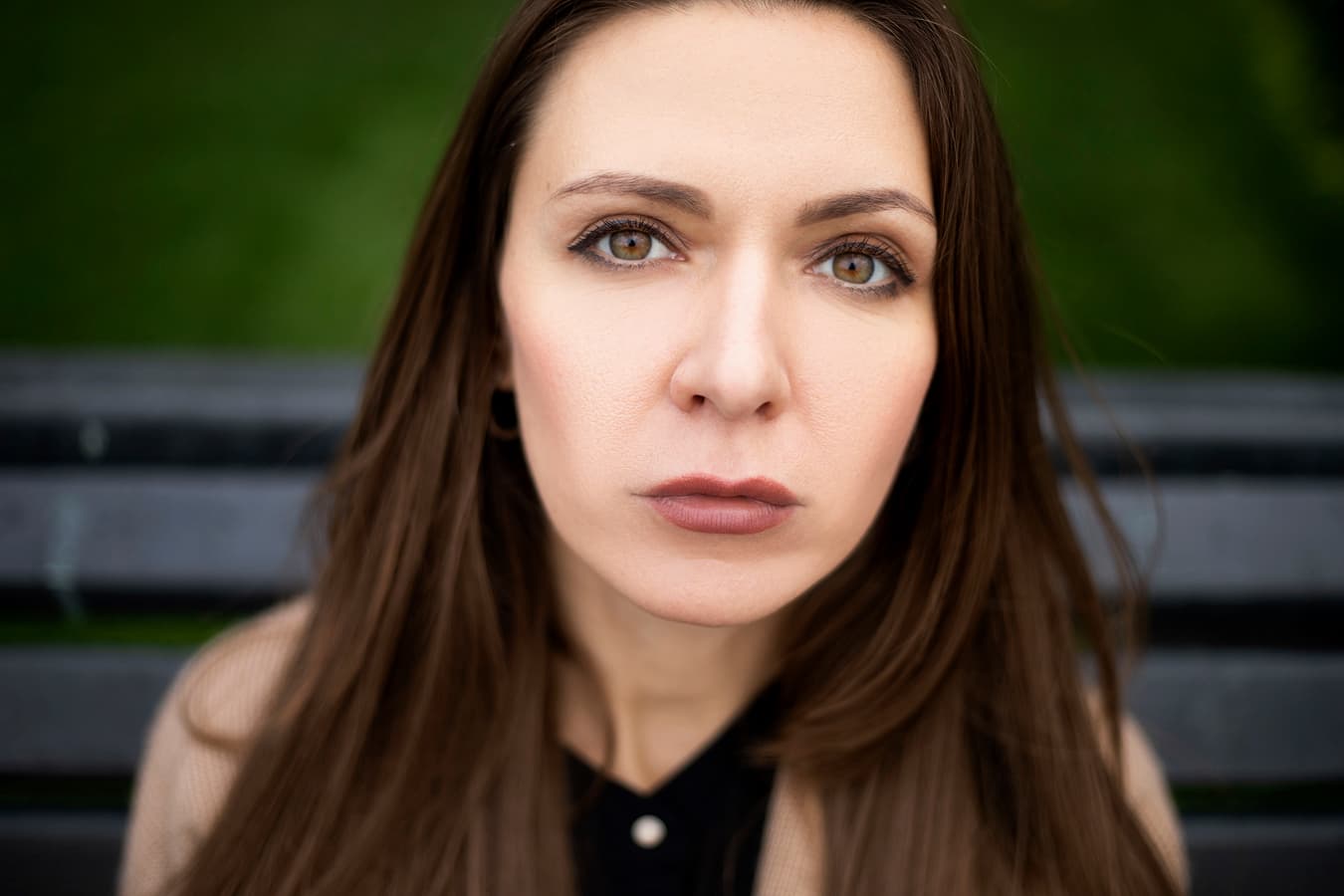
-
— How did you enter the profession, and how long have you been working in it?
— Like many others, I started in advertising. My sister worked as a manager at a modeling agency in Crimea, where I’m from. I brought a disc with photos of Crimean models to the first production company I found—Anomaly Film. I told them that if they ever planned to shoot in Crimea, they could reach out. I suspect I began my search with companies starting with the letter “A” (smiles). I made a good impression on Olya Timofeeva, the casting director there, who happened to be looking for an assistant. That was in 2004, during my penultimate year at university. So, I’ve been in the profession for 16 years now. I worked with Dima Sukhanov for three years, who became my first “godfather” in the profession. We had a wonderful team, like a family. Besides advertising, we worked on three Arab projects and a Portuguese short film. It was interesting but challenging. One task, for instance, was to find three African men around sixty years old who looked as similar as possible. I recall foreign directors asking, “Why don’t you have handsome men?” Whenever I saw a brief requesting a “35-year-old man of European appearance,” I knew I’d be getting more gray hairs. After a nervous breakdown during another project requiring a handsome European-looking hero, I decided to take a break. At that time, books like “Reality Transurfing” and “The Secret” were popular. I wrote a list of what I wanted in my future work: to work with people, have a flexible schedule, a creative job, and the ability to choose. A week later, a girl I’d worked with at Anomaly called and asked if I wanted to try working as a casting director in film at Star Media, which was just starting to produce series. I went for an interview with producer Halyna Balan-Tymkina, and that’s how my first film project happened. I stayed with the team until 2014.
-
— Which project from that period stands out to you?
— The project “Anna German” stands out. I handled the Italian casting because I speak Italian well. I had to consider the actors’ resemblance to real people. I found a great young Celentano and a wonderful Dalida! Luigi Tenco, who committed suicide after losing at Sanremo, was portrayed by the excellent actor Gaetano Solfrizzi. He embodied the role so well, both in appearance and spirit. We still keep in touch with all the Italian actors. I often visit Italy, and we meet for coffee. The role of Anna German’s producer was played by Italian actor Gilberto Idonea, known for “Malèna” by Tornatore. He was a wonderful person who sadly passed away last year. The filming took place in Croatia, with six languages spoken on set. Since then, I’ve often worked on international projects.
-
— What is your favorite project?
— That’s a tough question… I love all projects; each is a challenge with its own difficulties, and I get nervous every time as if it’s my first. After almost every project, I felt like leaving the film industry (laughs). It seemed like it wasn’t for me, as I took everything too personally. But fate kept bringing me back. Film is like a drug. Once, in Italy, Gilberto came to meet me with a friend who turned out to have psychic abilities. She started telling me about my life and tragedies she couldn’t have known. She said, “You must accept an international project at the end of the year.” I forgot about it, but later that year, I received an offer for a project with the Turks. Mentally, I was already planning to escape winter in Asia, as I can’t stand the cold. But recalling the psychic’s prediction, I went for an interview with producer Natasha Yakovleva at Star Media, and everything worked out. Natasha is unique and very talented; we still collaborate. The project, a series called “Oriental Sweets,” was memorable. We had about ten real Turkish actors. Although it was about Turkey, we shot in Kyiv. All the extras and bit players were Turks. Finding 200 Turkish actors was a challenge. We reached out to the Association of Turkish Businessmen, the consulate, the embassy… In the end, we had oligarchs, businessmen, and students acting. I realized that formal acting education isn’t always necessary. Turks are naturally expressive and not camera-shy. They don’t have a traditional acting school; most famous actors are former “Mr. or Miss Turkey” winners. The more an actor creates their own image and directs themselves, the more successful and well-paid they become. We searched for the main hero for a long time. We needed a god-like handsome man to drive women crazy. Eventually, we found a not-so-famous actor who was a singer and had a small role in “The Magnificent Century.” We also had a Turk who had never acted before but played a lawyer in several episodes with many scenes and lines—and he performed as well as professional actors. I realized that foreigners don’t always need professional actors; they usually look for interesting types. For instance, last year, I did casting for an American horror film and found many Americans in Kyiv. Some were professional actors, but even non-actors did well in auditions. I worked with them, showed them technically what to do, and they repeated it very naturally! Of course, for deep dramatic roles, that’s not enough, but for episodic roles, being natural and fitting the type is sufficient.
-
— Have you discovered any actors or actresses?
— I love almost all our actors. Even if you don’t fit Ukrainian cinema, you might be perfect for Hollywood. I’m serious.
-
— Do you have any fears in your profession?
— I feel more confident in international projects. I really dislike massive castings. They rarely justify themselves unless you truly don’t know what you’re looking for. My least favorite phrases are “let’s keep looking” and “don’t we have any more masculine handsome men?” Natalia Yakovleva and I searched for Lesya Ukrainka for the series “Pleiad” for a long time. In this case, we did try over 50 actresses. We also looked for Franko, Lysenko, Pchilka… I studied these figures from scratch because I attended a Russian school in Sevastopol and knew nothing about them! I was amazed by their level—they were world-class personalities. We’ve been working on this project for three years. God willing, everything will work out. It needs to be done at the highest level because the historical series genre in Ukraine has been somewhat discredited, and everyone thinks “Pleiad” will be another mediocre film about historical figures. Significant funds are needed to do it beautifully, to show events in different countries, like how Franko taught at universities or how Pchilka showcased embroidered shirts in Paris.
-
— What do you dream about?
— Living in harmony. For me, the word “harmony” automatically means I’ve realized myself in both profession and family, and everything is good in all areas of life. Professionally, I dream of our actors working abroad. I’m working towards that— thanks to connections and language skills (Italian, English, trying to learn French, and aiming to master Spanish). When I was stuck abroad during quarantine, I thought about doing something useful. I created a presentation of our actors who speak English well and sent it to all colleagues in the International Casting Directors Association. We have real talents! I sincerely want to help them. And there’s an opportunity. European colleagues are already reaching out to us in search of specific types. The fact that foreign films are being shot here and young actors can appear in Netflix projects is wonderful, and I’m very happy to work on such projects. Currently, we’re preparing another French project, and I hope Ukrainian actors will get interesting roles.
-
— Have you acted yourself?
— Directors have always offered me roles, but I don’t want to. I feel insecure and don’t like how I look on screen. I’ve had the experience, but it’s uncomfortable for me. Maybe at 70, when I no longer care how I look on video, I’ll play some intelligent grandmothers (laughs).
-
— What are your hobbies?
— I love learning languages. I try to watch films in the original language and immerse myself in the linguistic environment. I can’t imagine life without travel. There were times when I flew somewhere every month or two. Now, it saddens me that I can’t just pack up and fly somewhere tomorrow.
-
— What did you dream of becoming as a child?
— I don’t remember, but I always felt I was born for something special and had to do something useful in life. I really hope I’m doing that. It’s a huge joy for me when actors are happy after being cast in great roles. I rejoice for them as if for myself.