Casting Director Taras Lahodovych
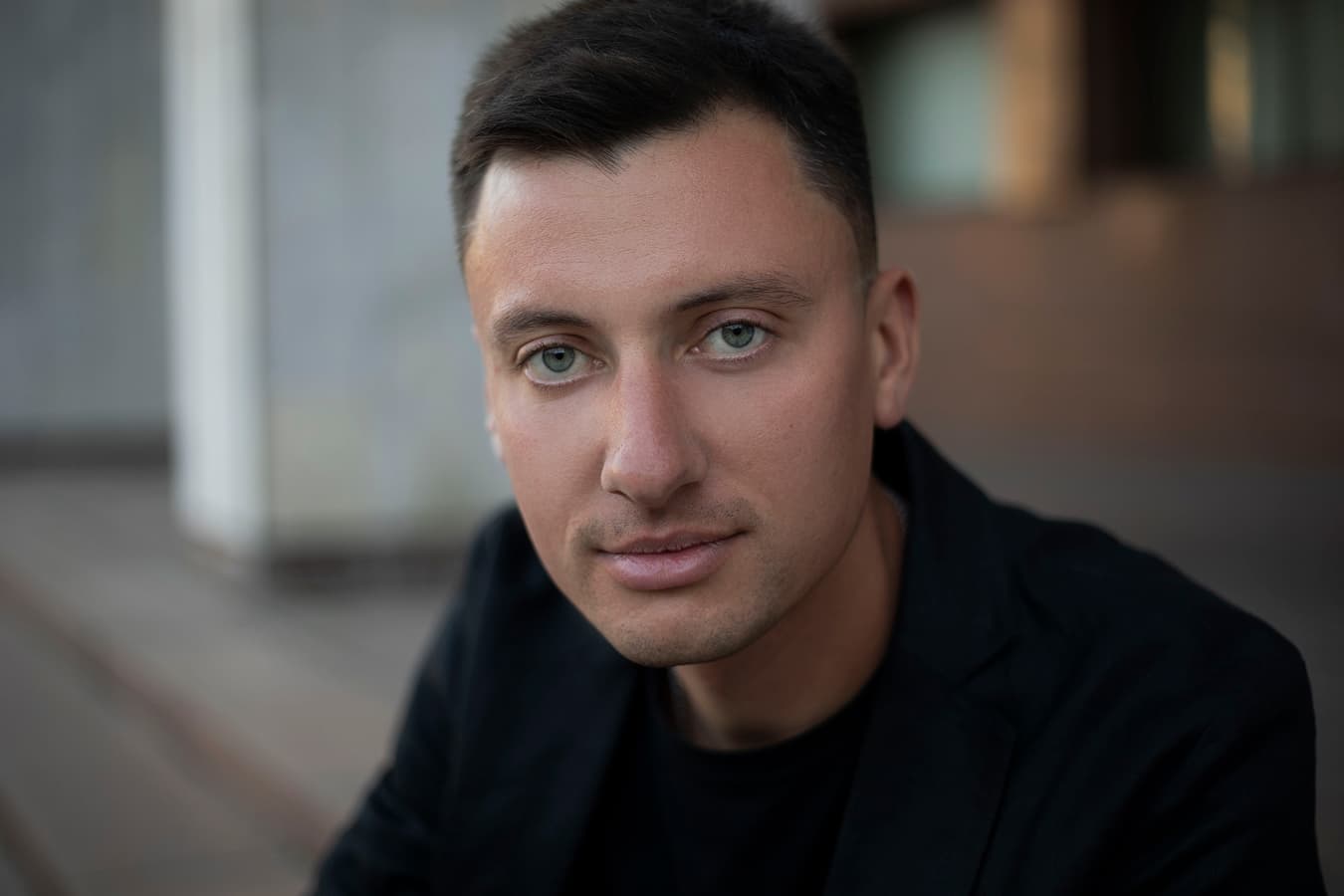
-
– How did you get into this profession, and how long have you been in it?
– The story is actually quite funny. I’m originally from Ternopil, where I worked as a sales representative, then as a supervisor. When a friend of mine opened a company in Kyiv, she offered me a job there. She said, “Since you don’t have a wife or kids, come to Kyiv.” So around the end of 2014, I moved to the capital. I didn’t know the city, so for the first couple of weeks, I just walked around, getting to know the area. But I immediately knew I wasn’t going back.
At some point, I thought I should attend a concert or something—it’s the capital, after all. I found a show at Atlas on the internet. I was surprised it was at 8 AM. I went, saw a big crowd and a line, we were let in, and no one was taking money for tickets. The Hardkiss, Iryna Bilyk, and TIK were performing, and filming was happening simultaneously. At the end, a guy came up to me—now I know who he is—and handed me some money. I asked, “What for?” He said, “It’s for being in the crowd.” I asked, “What’s a crowd scene?” He explained it and told me he worked on “The Voice of Ukraine” and other STB projects. I got curious and started attending tapings to see how it all worked behind the scenes. After two or three months, I realized I didn’t want to go back to my old job. So I quit, left the company-provided apartment, found a new place, and dove into production work. At one point, I was involved in seven projects simultaneously.
I started out doing extras work. My first gig was on the TV series Dog, where I played a waiter. I’d spoken Ukrainian for 25 years, so when I said “hello” in Russian, it sounded really funny—my accent was thick.
That’s how I met people in the industry, and they offered me work managing extras. I did that for about a year, back when Front Cinema Production was still around. Then a friend of mine got a call from Star Media—they needed an assistant for actors and extras. I agreed. I remember my first day on set: Danilo Belykh, a Moscow actor who starred in Svaty, came out, and my hands were shaking—I’d only seen him on TV, and now he was right next to me.
I was fascinated by the filming process. I started understanding what a casting director does and what directors are looking for. I’m probably the youngest casting director in Ukraine. I’ve been doing this professionally for about three years. I was very lucky to work under casting director Anna Degusar, who taught me everything. We’ve worked on all our projects together. I’ve also done a few independently, like the third season of Charged, and worked with Oksana Sukhanova and Viktoriya Ilina on another project.
-
– What is your educational background?
– I actually studied something somewhat related to this field. I played musical instruments and did vocals for a long time, but after my voice changed in ninth grade, I switched to acting. I graduated from Poplavskyi College in Ternopil, from the Department of Directing Theatrical and Spectacle Events. So I did get some basic industry knowledge, though it’s not Karpenko-Karyi. After that, I was offered a job at a theater, but the pay didn’t make sense, so I switched to studying economics.
-
– Do you have a favorite project?
– I’ve worked on a lot of melodramas and emotionally heavy films. But then I took on the sitcom Charged and the series Papanky with the “Diesel” team. Comedy just has a lighter vibe. But my favorite project is Someone Else’s Life, which we shot in 2017. The director was Oleh Fomin, and the cinematographer was Andriy Yosypov. It was a difficult shoot, but the result was amazing—great picture, cast, and artistic vision.
-
– Have you discovered any actors or actresses?
– Not so much discovered as gotten to know them. I haven’t been in the industry that long, and I didn’t have any contacts before. I’d seen people on TV, but meeting them in person is a whole different experience. For example, Sasha Yarema and Nazar Zadniprovskyi—fantastic actors. Yarema, in particular, was a revelation for me. What’s important is that he’s versatile—not just a comedy actor, but strong in drama too.
-
– Do you have any fears in this profession?
– Being unnecessary. Especially during the COVID lockdown. We were just about to start three new projects—casting was done, we were ready—and then boom, quarantine. I was used to spending all my time on set, even if I didn’t have to be there, just for the atmosphere. And then suddenly, I was stuck at home with the quarantine getting extended again and again. Thoughts started creeping in: “Damn, they’ll forget about you.”
In my first couple of years, I always took on a new project right after finishing the previous one. There’d be just a week in between. I didn’t go on vacations because I was afraid that if I left, someone else would take my place.
I really love my job—especially the people, the actors. They’re amazing, with a wealth of experience. My social circle completely changed when I entered this field —it’s all film people now. I’ve made a lot of friends here. For example, I’m close friends with actor Illya Malakov
-
– How many actors do you show the director?
– Depends on the role. Even for secondary parts, it’s a mix. I select a lot myself, but the final decision is up to the director, producer, and channel. For main roles, the director has full control, without producer interference.
There’s no limit to how many I show. But I do prefer to work with actors I know, whom I’ve seen on set, especially in tough situations. Some actors understand our tight schedules—others don’t. Right now I have 1,360 unread emails—I don’t even know who all these people are. I know that’s unfair. I try to go through them and at least reply “thank you” when I can. If there’s time to prep before a project, I do go through that list. Usually, I narrow it down to ten people max. I have a big folder with casting materials from every project we’ve done. For Charged, we used Facebook because we needed young people. Before that, I mostly worked with the 30+ category. Now there’s also Dzyga, but it’s not fully up and running yet.
-
– What kind of photos do you select of actors?
– Standard portraits, usually. But I can also show non-professional photos if I think they match the role. Full-body shots are also a must. The same goes for self-tapes.
How does a casting process go? Say we’re looking for boys aged 10–12 for a lead role. First, we compile a selection of about 30 photos and show them to the director. Then, we ask for self-tapes. After that, we invite selected kids for live auditions. The intro video is just to introduce the actor to the director or whoever’s receiving it. If we’ve already selected the actor, we don’t need it.
-
– What did you dream of becoming as a child?
– A priest. I helped priests at church and wore a cassock. I’m from the west of Ukraine, where people are very religious. We even had special Sunday clothes for church. I liked how people turned to priests for advice. But my older brother became a priest. He’s now in Sweden.
-
– Would you want to be an actor yourself?
– No. I understand how hard it is. We’ve filmed in –20°C, and actors were diving under ice, turning blue. Now I understand why they’re paid well—it’s deserved. When you have to cry, scream, or show despair all day long, the whole crew gets tired after lunch, but the actor has to stay in that one emotion, that one mood— and no one asks if they’re tired or sleepy
-
– Do you have any hobbies?
– With my current busy schedule, any chance to go out and relax with friends is a treat. I love karaoke—even though I can’t sing. I just like the vibe.
-
– Do you enjoy watching movies?
– Yes. I’m into psychology and mind games. I don’t like comedies. With age, I guess my taste changed—I now enjoy films that make you think. My favorite film is Schindler’s List. I don’t watch Marvel, Star Wars, or Harry Potter. Just not my genre.
-
– What do you dream about?
– I dream of continuing to grow. I have goals in cinema that I’m working toward. I’ll share them when I achieve them. As for my personal life—I’m content. Everything’s going well, thankfully.
-
– What advice would you give actors?
– Many actor friends of mine go to auditions expecting to be cast. Don’t do that— you’ll only be disappointed when you hear “no.” An audition is a chance to be seen, to get acquainted with the director or team. If you’re invited—that already means a lot.
You absolutely must learn the script. Some actors show up unprepared, and that’s really frustrating during the work process.
Our country is starting to gain momentum in this industry. Foreign productions are coming here—Netflix, Van Damme. We were actually supposed to meet with the casting director of that project, but it didn’t work out.