Casting Director Alona Lotra
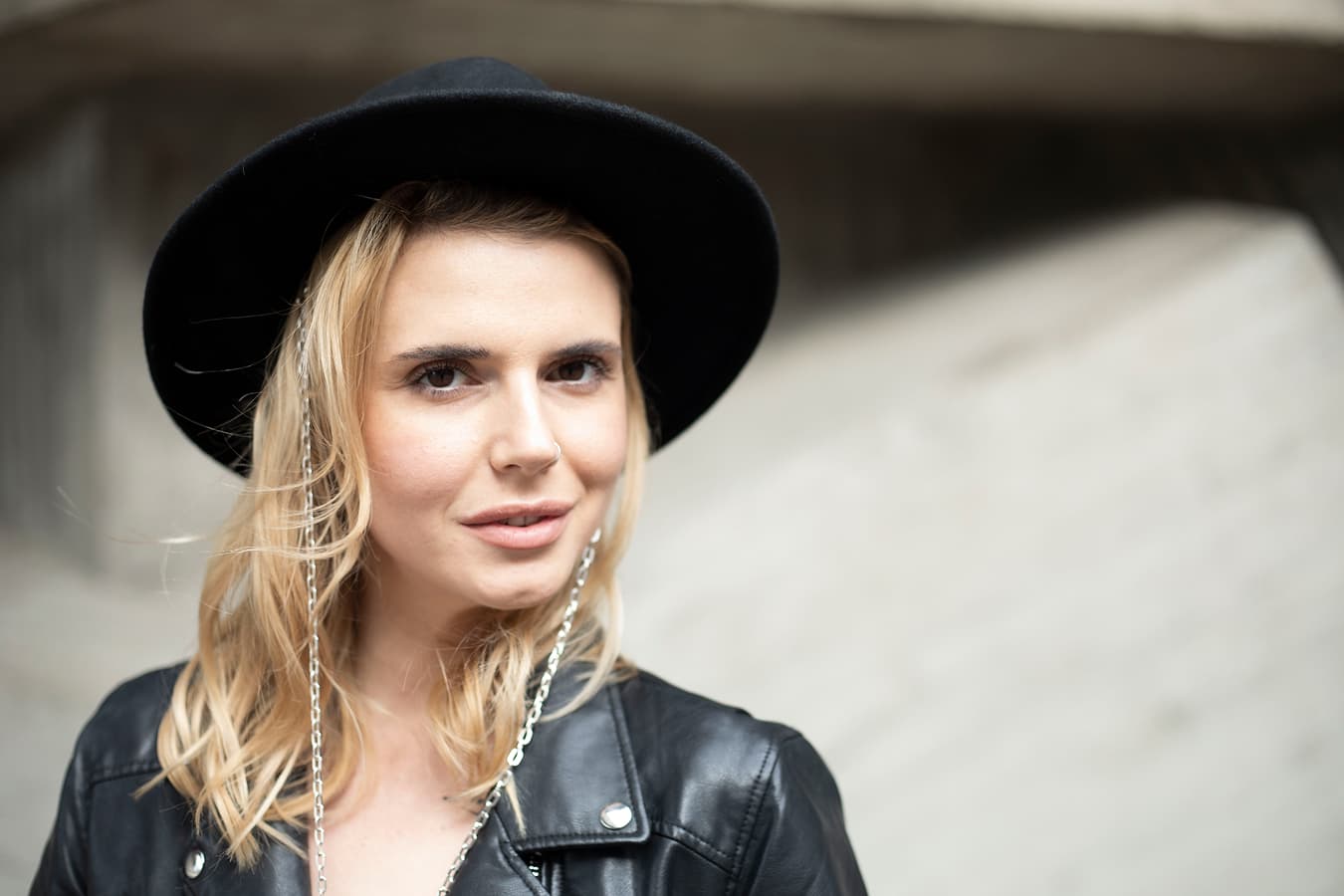
-
– Tell us how you came to this profession.
– I entered the profession in 2008. My mom worked in advertising and suggested I try myself in this field. I was very resistant at first, but then agreed. She called a production company and asked if they needed a young girl for the summer. I was 18 then. I had just finished my second year at Kyiv National University of Culture and Arts, studying PR/journalism, but I never worked in that field.
I called the production company, and they said, “Come in! You’ll be a stylist’s assistant!” So I agreed. But I actually overslept the first shoot—I was still young (smiles). After the project, I realized it was really my thing. Unfortunately, I didn’t work long—the stylist left to study, another girl came in with her own assistant, and I was no longer needed.
Every two weeks I would call the production company and beg them to take me back: “Take me, please!” They gave me a few small projects as a stylist—but then silence. And then… Oh my God! I remember it like it was yesterday—January 3, 2009. Oksana from Svetofor Film called and asked, “Hey Lotra, can you help with a casting?” I said, “Of course!” although I had no idea how it all worked.
I had acted a lot—childhood, teenage years, even in big projects—but I didn’t know what casting involved. I arrived, and the office was under renovation, everything squeezed into one room, covered in plastic. They sat me down at a Mac and started explaining what to do and how to use everything. I struggled for a couple of months, learned everything from scratch, wrote things down on sticky notes and plastered them around the computer. Over time, I realized—this is mine, I really love it.
After working four and a half years at Svetofor, I decided I wanted to start my own business. I left and, a year later, created Lotra Casting. So really, it all started with that call my mom made to Svitlana Solovyova.
-
– Do you have a favorite or important project?
– Yes, there’s one. It’s close to me not because it was a blockbuster, but because it was a family project: Danone’s “Vesely Pastushok” commercial. My mom had already had my baby brother and loved reading him “The Toreadors from Vasyukivka.” When the Danone project came in, she was working at an agency. She had an idea—just as a mom—to create a concept for the ad: a boy playing in a field with a cow, reading her books, singing, catching butterflies. Her little son and that book inspired her. And the client approved it.
The ad needed a real cow and a boy who wasn’t afraid of it. To find such a kid, I drove around Kyiv region villages. Today, you can just post on social media and find anyone, but back then—you had to get in the car and search. This was 12 years ago…
The task was clear: choose only among rural kids. It was crucial the child could interact with a cow. And I really found a boy from a village who wasn’t afraid. He was the right type—playful, kind. After the project, he became a star. He was cast in other commercials.
-
– Have you discovered any actors?
– It happened that many actors came to me for their very first casting—Slava Bohushevskyi, Zhenya Lebedev—and then things went great for them. Same with girls and kids. Zhenya Lebedin is a very talented guy—he’s acting a lot now. I remember him as a little kid, I cast him in several commercials. He’s grown so much! Feels like he’s everywhere now.
There were also theater actors who had never done commercials, and I “pulled” them into projects. Then the client kept hiring them, and some even became the face of a brand.
There’s an actor, Dima Vyvcharyuk—he works at the Operetta Theater. I remember a story. It was at Pronto Film, live castings. We were about to meet the director, and Dima said, “Alona, I can’t come, I have a show!” I told him, “I don’t care— don’t let me down!” It was a major director and the client was Kyivstar. Dima showed up with flowers, apologized, performed—and the director liked him. Then Dima said, “I hope I don’t get cast.” I told him, “If you’re confirmed—you’ll do the shoot even if you have to stand on your head!”
And he got the part! I called him: “Dima, stay quiet—you got the role.” He panicked. But for a bottle of whiskey, he arranged a swap with his colleague. After that, he appeared in many Kyivstar commercials, became the face of the brand. Now he rarely films—and doesn’t need to, since he has a steady client.
Another is Andrii Merzlikin. During the pandemic, we shot a PrivatBank commercial. He had to dress up in different costumes, even as a bearded woman. He didn’t know about these roles at first, even though he read the script. But everything went great. He ended up doing two more shoots after that.
Sometimes, you have to push people. I don’t like it when actors refuse to meet the director. If you go to a casting—be ready. Yes, callback dates can change, but I always insist that people show up. They say I’m tough—and I am. But they thank me later for pushing them.
-
– Do you have any fears in this profession?
– Yes, especially when a tough project comes in with very little time. I often get called in for “crazy” castings—not just “mom-dad-mayonnaise.” When there are many storylines but tight deadlines—you always fear not finishing or doing a poor job. I have many fears in life. For example, there was a Parimatch project with Conor McGregor as the lead. I had to find the right types very quickly. I was anxious and unhappy with myself. But then the creative director said it was the best project in 10 years.
Sometimes you lead a project, and the production starts complaining, brings in other casting directors—you don’t know how others will behave. I always lay out my terms. I have a “blacklist”—people I don’t work with. But still, they try to push these people on me. Of course it’s scary—what if someone ruins the shoot? Even people I know: they beg to be on a project and then say, “I have a kid, I need to go home.” Why ask in the first place?
I try to keep my distance from negative people. But there will always be those who take offense.
-
– Do you still want to act?
– I do act. I’ll be in a music video soon. I mostly work in photo or video projects. I don’t have the extra time or resources to go to castings. Though I know I should— and it’s my thing.
Now I teach actors: you have to be in a good mood, ready to wait in line for two or three hours. I sometimes went to castings, but always asked, “Please let me go ahead.” Physically, because of work, I just can’t sit there that long. But if someone calls and says, “Alona, we want you in a commercial or music video. Here’s the role, the director wants you”—then yes, of course, I’ll do it. But it doesn’t happen often or on a large scale.
I’m already in the 30+ age category, so “mom-dad-mayonnaise” might fit. Sometimes I text my colleagues, “Let’s shoot something—I’m ready!” and they ignore me. These are my own colleagues, who grew up in my casting base. But sometimes, a director says, “God sent you to me for this role.” That’s when they see you clearly.
-
– Would you like to act more?
– Probably yes. But it’s more for the soul than as a job. I want to explore and realize other projects. Right now I’m trying to run a blog more actively, to share my knowledge. I created a project called “Rozbirky z Lo”—it takes a lot of time and energy. Plus, there are shoots. But I’ll always happily act in projects if I’m invited.
-
– What did you want to be as a child?
– A janitor. I remember an elderly lady who lived on the first floor of my grandma’s building—she worked as a janitor. I guess I didn’t want to be a janitor so much as to be like her. She was such a kind, pleasant person. As a kid, I could just sit and listen to her for hours. I always came to chat.
-
– What exactly did you like about her?
– She was very kind, gentle, warm. Like they say—a sunshine person. She radiated warmth. I was the neighborhood troublemaker—I could cause a ruckus, but I could also calmly sit on a bench and talk with her. Everyone really loved her. She had so much respect. Those qualities were important to me even as a child.
-
– What are your hobbies?
– My mom put me in ballet at six. I hated it, cried a lot so she would stop taking me. I danced for maybe three or six months, and then she finally took me out. If a kid doesn’t like something—you shouldn’t force it.
In first grade, I did ballroom dancing for a year. Then I wanted to switch clubs but we couldn’t find a good one, so mom put me into figure skating—because I wanted to learn. When mom’s company had corporate parties, they’d rent out a big rink with families. My godmother’s son also did figure skating. Everyone skated —except me.
Once I started—I loved it. I fell, I cried, got bruised and swollen. But I did it for a year and then quit. Don’t remember why—maybe my mom sensed it was time. Kids change their minds quickly.
Later I did ballroom again for three years. The problem was finding a partner—not all boys want to dance. I’m tall, they were short—so it didn’t work out.
Then one day we were watching TV and saw an ad at the bottom: the famous Todes ballet was opening a studio in Kyiv. We called, went—and I stayed there dancing for five years. I quit dance after finishing school.
Now, as an adult, I wakeboard, snowboard, sing, and after 20 years I went back to figure skating. I also work out at the gym.
-
– What do you dream about?
– I want to go to the Maldives and Bali. I also dream of a big family—I’d love to have four kids, or at least three.
I dream of opening my own café—something soft and cozy, with little cakes and coffee. I dream of a big house and four dogs. I know it’s all achievable over time— and I want to work toward that.
-
– If you were an object, what would you be?
– Probably a strange one. I like to dream a lot, and I want everything here and now. So people often tell me: “You need a lip-rolling machine” (a Ukrainian joke implying over-ambition). That’s actually the first object I associate myself with.
But if I had to choose something serious—then something strong, solid, unbreakable. A wall or a rock. I’m a strong person, and it’s hard to break me.
-
– If you caught a goldfish, what three wishes would you make?
– A beautiful countryside house—for my parents. A sports car. I love speed. I’d like to release stress and emotions through speed, not on people. And third… I don’t want to say something cliché like “for everyone to be healthy and happy” or “end COVID”—that’s obvious. In such moments, people mostly think about material things or family well-being. I’d probably wish to travel a lot— with my loved ones.
-
– What advice would you give to actors?
– The most important thing is to have an acting portfolio—a good calling card. Constantly learn and grow: read books, attend workshops. For example, Theatre Akterstvo and Lyusya Ponomarenko offer a lot. There are many improv clubs too, where you can overcome fears and deal with rejection.
If you don’t want to take bad jobs, go explore yourself instead. Watch useful content on YouTube. And find ways to attend good courses.
For actors, I think the most important qualities are humanity, kindness, and respect. Some actors start in background roles and, a few years later, become stars—but treat others badly. That shouldn’t be. No matter how great an actor you are—you must stay human. That way, you attract more projects, people talk about you positively, and bring you good energy. You need constant growth. Even if you’re a super professional—you must still invest in yourself.