Casting Director: Oksana Sukhanova
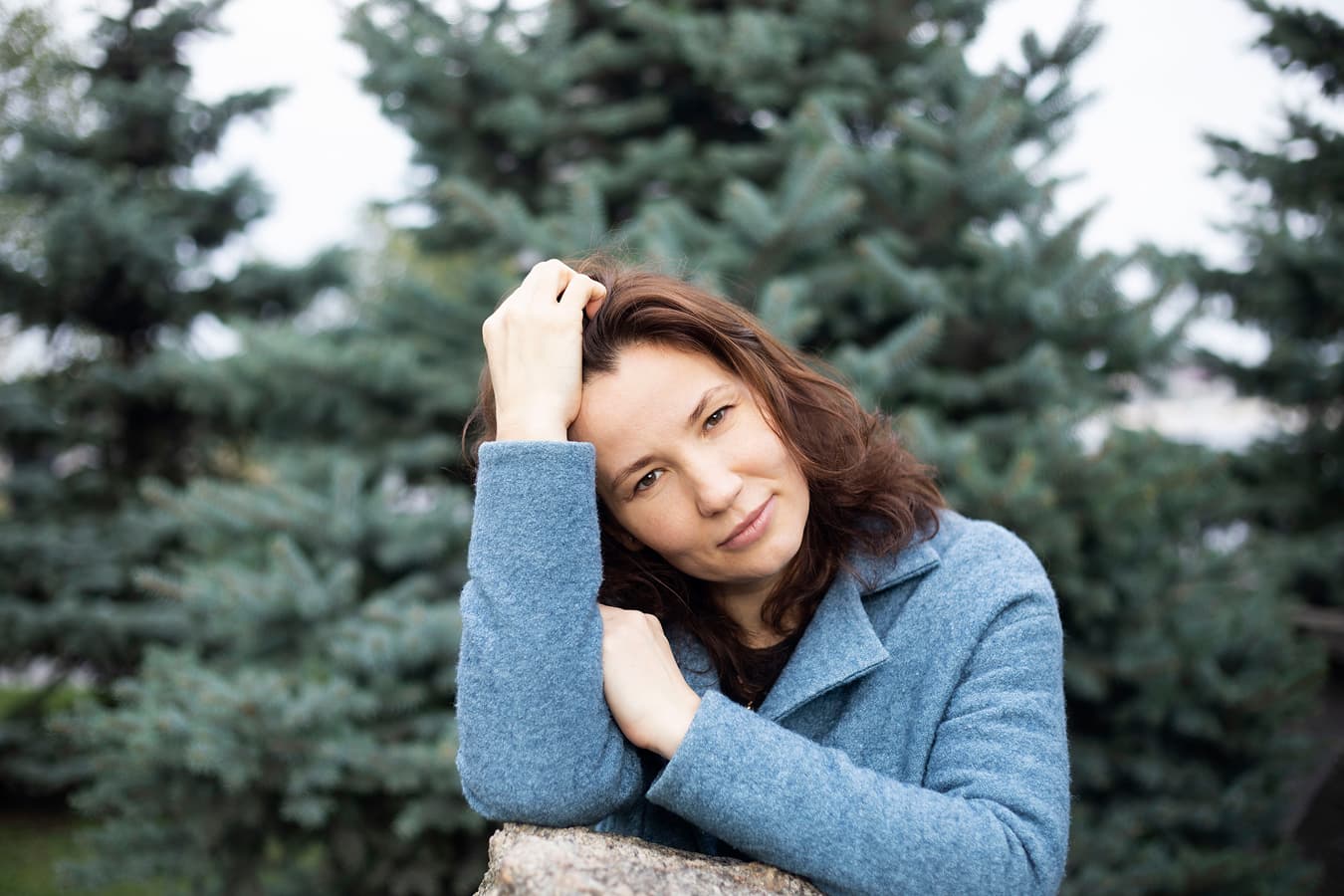
-
– How did you come into this profession, and how long have you been in it?
– I had been circling around the film industry since around 2006, but my mind was focused elsewhere back then. Then in the summer of 2015, we went rafting down the Southern Bug River. With us was Tina Braganets, who said, “Oksanochka, you should try casting—you’ll be great at it.” She invited me to work on a pilot for a series which, as I understand, never got launched. I started as an assistant to the actors, then moved on to work on set. I showed leadership skills, and Tina said she would recommend me. That’s how I took on the project “Family Dramas” on 1+1. It was something else (smiles). I read the script and realized I had no idea what to do—I barely knew anyone! I had no experience… But I thought, if I’m going to take a risk, I’ll take it all the way—that’s how I am, I always go where it’s scary. There was a casting, casting lists that Tina had drafted. Then came along Olya Misko, who is now a producer, Lena Shevchuk, Oksana Stepchuk, Zhanna Skoraya—the director, Lena Makhanyok—now also a producer, and Natella Chkhartishvili-Zatsarinna—the creative producer, Roman Lukin. They helped me, they were my teachers. I’m proud that within a year, Natella called me the best casting manager the project ever had. The scariest part is doing your first casting —after that, it gets easier.
I had no idea how to find actors before. I started posting casting calls on Facebook —I was one of the first to do it publicly rather than through closed circles. Then commercials and other series started coming in. There was the feature film “My Generation’s Hero” (“Heroy moho chasu”), where we were looking for people without acting education. We needed very simple and organic characters. Tonya Noyabreva is the kind of director who puts a person in a situation and lets them act on instinct—and that’s genius. That’s what makes it interesting. The film was full of such moments—it was a mirror of reality, just a few days from the life of an ordinary person. We did a huge amount of work—I’d even say titanic. Watch “My Generation’s Hero”—and you’ll want to be nothing like the main character. You’ll want to be someone else, like Elon Musk, and then maybe we’ll start living in a better future sooner.
It was on “Family Dramas” that I met Vika Ilina. She came to me as an actress, and we became close. For the first time in my life, I found “my person.” Also, my beloved husband—Vyacheslav Vetkovskyi. These two people allow me to be authentic, to not try to “fit in,” but to be how I want to be, at least with them. They always support me. I’m always running around with crazy ideas! I think I’ve just come up with a way to make the film industry in-demand across all fields. I’ll share more after New Year, closer to spring.
All my later projects were connected to Vika—we worked together. Except for “School.” I loved Beverly Hills 90210, so I really wanted to work on something similar. But it turned out as you saw… Then came “The First Swallows.”
I always translate many things into numbers. Just look at what else could be done with those numbers, what alternative solutions exist. When money is spent just to fill air time with anything… Why? Of course, creating something that’s “not just anything” costs more, but transitioning to quality is always worth it. There’s a universal law that says quantity always turns into quality. That’s why I advise actors to record a lot of self-tapes—every day, at least one. I even launched a challenge once. It faded a bit—I need to stir it up again. Imagine doing daily workouts—how will you look in a month? Self-tapes are the same kind of gym for actors. You learn a poem, monologue, or scene—record a video. You get used to seeing yourself on camera, understand how you look from the outside, organize yourself, and grow. Actors ask, “How can I get noticed?” This is how. Do something every day and you’ll get noticed. Talent always stands out. But talent must be nurtured, developed, like a plant. Of course, some are kissed by God— but even they need to care for their talent, or it will die.
-
– Have you discovered any actors or actresses?
– Vyacheslav Vetkovskyi is an insanely talented actor. I probably first fell for his naturalness, and now he’s my husband! I love him very much. With him, I can talk about things I could never discuss with anyone else. Recently we talked about the words “must” and “need,” “want” and “can.” “Must” is compulsion, “need” is necessity, “want” is desire, “can” is possibility… And many other such topics— Vyacheslav opened a whole new world to me. Now I live somewhere above the seventh heaven, on a rainbow.
I love my job because I get to discover new sides of the same people all the time. I always thought Sasha Kobzar was a serious and thoughtful actor, but one day I passed by him and saw a little devil in his eyes. When we were casting the first part of “Crazy Wedding” (“Skazhene Vesillya”) and looking for someone to play the neighbor, I thought of him. He brought to life exactly what I wanted to see—and did it brilliantly. He’s a well-known actor, but I saw something else in him. That role he played was so cool.
Maybe with actors it’s like: “Let go. Do as you feel”—that’s when the magic happens. That’s the essence of acting: to react and to live through the moment. An actor is someone who is aware of what they’re doing and at the same time manages the thoughts and actions of their scene partners… It’s like a single organism.
-
– Why is there a barrier between casting directors and actors?
– There’s a barrier between all people. But who is a casting director? Someone who watches a ton of auditions, shares their vision, and sends selected ones to the director. When you start being friends or getting close to actors and give them too much leeway, you can’t objectively evaluate them. That hurts the actor first and foremost.
ЯI understand that what an actor wants most from a casting director is feedback—a yes, a no, and why. But I have 68 messages in Telegram right now, Facebook is calm today—only two messages, Viber has 8, but in various chats there are 953. Plus, there are notifications I also need to check. It’s a huge information load. When I worked on “School,” I had four assistants just to manage Facebook messages. And if I post a new casting call, I put my phone away—it turns “burgundy.”
Casting directors provide opportunities, and there are way more people who want them—actors, amateurs, and even just random hopefuls. Sometimes you watch a self-tape and notice a pattern: the worse it is, the more pompous it is. The weaker the actor, the more pretentious they are. Of course, talent should be protected and nurtured. And if it’s not quite talent yet, but a little “talentyk” or “talanyusik,” it should still be developed. But not through fights or attacks. Sometimes you tell someone something, and they argue with you. Why ask if you’re going to argue? If you want to prove something to me—send a good self-tape. Some ask, “Is there any work?” I always want to answer: “Yes. There’s plenty of work at my house! Come over!”.
I have 5,000 Facebook friends—I recognize almost all of them by face. I know many of my followers too. During “Family Dramas,” I had 80 people per day over two or three days for casting. By the way, I’ve noticed—the cheaper the project, the more work there is. For actors too. In a feature film, you won’t be asked to learn a 5 cm-thick script overnight, but in daytime series, that’s common.
To respond to someone, I have to go to their profile, check if I’ve seen their work before—films, self-tapes, actor reels. I look at photos, videos, and that takes 15 minutes. I can reply to four people per hour. Do you know how many people message me per hour? A lot. Especially when a project is active. If you want to remind me about yourself, send a direct link to your latest work (don’t make me download it), include your phone number, name, age, and height. Sometimes someone writes to me—I open the message and realize I know them, so I don’t even look at the link because I already know what they’re capable of. Believe me, I remember everyone. I have a great memory for faces and situations.
The barrier exists to protect my time and energy. Many actors think casting directors hide projects—but sometimes we’re under NDA and can’t announce them. For example, we do a pilot and propose actors we already know. Then comes the next stage. As Alla Samoylenko said: “When all else fails, casting directors go to Akmodasi.” I made a post about a lead role for a new project. After we reviewed everyone, we had 78 candidates for one role, 83 for another, and 54 for another. All of them sent in auditions and follow-up questions. Multiply that by the number of minutes it takes to answer each… You get the idea?
Actors today have incredible opportunities to promote themselves—through social media. For many, Facebook is their portfolio. If you write to me and send a video, you’re in my base. No need to comment “thanks,” “wow,” or “you’re amazing, Oksana” under my posts. It’s nice, but not useful. A like is enough—I see them. You can thank me later in person if my post helped you in some way. That’s a meaningful “thank you.”
Fees are another barrier. Actors sometimes say that we pay “our people” better than “outsiders.” I don’t have insiders or outsiders. But there is such a thing as project limitations. Sometimes, “our people” even get paid less. There are actors with such mastery that you’re just grateful they agreed to work for that fee. They come on set and you know—this project will be done well, and it will be great.
We’re given a budget, and we have to stick to it, plan around it—and negotiating that is difficult. Right now, I’m on a project with very small fees, and I simply can’t do otherwise.
You should really look into how much a minute or an hour of airtime costs on a TV channel. If you’ve appeared somewhere even once – people remember you. We casting directors have a group chat, and sometimes someone shares a screenshot of an actor and asks: ‘Who is this?’ They immediately get the phone number, the contacts – no one hides anything. And more than that – we recommend actors to one another
Think about which projects you want to be in, how much screen time you’ll have, and what kind of ‘time’ it will be. Think strategically. A profession is a way to make money, and whatever brings income can be considered a business. From there – think it through…
I’ve done everything I could to break down the barriers between myself and the actors. I write posts on Facebook under the hashtag #fortheoneswhoneedit. Great recommendations also come from Alyona Marchuk, Vika Ilyina, Arina Petrova, Alla Samoylenko – really, from any casting director! A platform called Dream Cast was recently created, initiated by Olga Lyubarova and Pavlo Makarchenko. Why did I start doing all this in the first place? Because explaining to every actor individually what I need from them is ineffective. Now many people already send properly formatted emails. Many have YouTube channels with audition footage, Google Drives with organized photos. Actors attend training. Of course, you need to improve your skills! Singers rehearse, theater actors rehearse – for film actors, selftapes are the rehearsal. You need to maintain your social media. Instagram is hard for me, but I still try to stay active there. Facebook is more like an official storefront. Treat it that way: make it high-quality, engaging, and sell yourself.
-
– When you walk past shops, some have cluttered windows, some are overcrowded, and some are beautifully designed with a clear product display. Which one do you stop at?
As Buddha said, ‘You don’t necessarily need to read – just observe and be aware.’ But in order to be aware – you need to read. There’s so much to read these days! I spend two hours a day on it.
-
– What do you read?
Various articles, lots of topics, fiction too. The last thing I read and performed in roles was The Master and Margarita, a scene with Pontius Pilate and Yeshua. Before that, my husband and I spent several nights reading Blaise in roles.
-
– Do you have a favorite book?
My favorite is Gone with the Wind by Margaret Mitchell. It may seem like a romance novel, but it’s actually an incredibly wise book about relationships between men and women, about their mistakes and the consequences of those mistakes. I admire Scarlett for saying: ‘I’ll think about it tomorrow.’ And I love Rhett because he’s a real man. Only a real man can love like that. But most of all, I admire Melanie. When I was younger and more naive, I liked Scarlett the most. But later I realized that Melanie embodies quiet, wise, feminine heroism – she is the light. And I want to be like her. She’s even stronger than Scarlett, emotionally. Melanie is the best of what a woman can be; Scarlett is the most effective.
-
– Do you have fears in your profession?
Fear is the oldest and most vivid human feeling. And I’m grateful for my fear – it drives me. It’s really interesting to be afraid in my profession. In general, the casting director is the first to create the film universe. There’s a screenwriter who pours their fantasies onto paper. The casting director takes those fantasies and brings them to life in various versions, and the director then chooses from those and creates the world.
They say there are bad scripts and good ones. No – there are justified and unjustified ones. Just like life isn’t good or bad – it becomes so not because you’re a good or bad person. People with ‘good’ lives often make many bad choices. Same with a script. If we can’t find the logic in it – we call it bad. But it might just be illogical. And even the most illogical script can and must be justified – that’s our job.
Have you noticed how in fantasy films people give human qualities to objects? For an actor, every object is alive. And if the actor, analyzing their character, can see events through the character’s eyes and justify every action – the role will be perfect. Often, when you ask an actor what their character felt, they retell the script. But feelings are a reaction to what’s happening.
An actor even looks different in a photo – their face, their gaze tells a story. There are people who just pose, and there are those who speak with their body. Try to live through emotions, not force them out. The camera sees that. A good audition is one you can watch without sound and still understand what it’s about and what you’re feeling.” “Back to the topic of fear – sometimes I’m afraid I won’t meet expectations, or afraid to turn down a project. Just as actors are afraid to accept one. Afraid because you don’t know what’s next. I don’t plan projects far ahead. I don’t have a two-year schedule. But I clearly know what I want, and it comes to me. It’s scary to sit and wait without hope. It was scary during the lockdown – money was running out, but life had to go on. Doing nothing is scary too. It’s scary to disappoint an actor by not approving them for a role.
“Before I met my husband – Vyacheslav Vietkovskyi – I never realized what an actor feels when they’re cast. It’s a fantastic feeling. But actors are masochists! First, they worry whether they’ll get to audition. Then they record it – and wait. Then, if they get the role – they stress about the fee, the schedule, and all this even before the project airs! And then comes the broadcast – oh God, what a profession this is!?”
“On set, they might be insulted, humiliated, treated with disrespect – it happens everywhere. My husband said how many times he sent self-tapes, put his heart into them, and no one responded. It’s scary to disappoint someone. Acting involves the ability to wait, to hope, to believe. My advice is this: when you get a self-tape request – enjoy recording it, send it – and forget. Add it to your library, label the character and the mood. If not today – then tomorrow, or later, it’ll work. Believe me: someone will visit your channel, find what they need, and approve you – and you won’t even know. One day you’ll get a call: ‘Are you available?’ And may you have a free window between shoot days.” “It’s scary when the wrong person gets the role. But the best feeling is when an actor not only meets but exceeds expectations. How to do that? Enjoy what you do – and expect nothing in return. Never ask for anything – they’ll offer it themselves. Just do your job.”
-
– What is your degree in?
– Social psychology.”
-
– What did you dream of becoming as a child?
– A director and an actress. When I was a student, I used to direct small performances and act a little. Eventually, I realized I was a casting director— because the acting and directing paths didn’t work out. But I’m good at helping others. Casting directors are people who help actors fulfill their potential. We read souls.
I’ve appeared on screen a few times—it’s interesting, just like directing, but I haven’t yet found my mentor. I admire Tarantino’s imagination. I really like Bykov— you can learn from him just by analyzing his work. By the way, here’s a life hack for actors: analyze your colleagues’ work or those you admire. Look for the unique in yourself. Think about what that actor felt in the scene, how they would play your role. Directors share their inner worlds, and actors help bring them to life. I haven’t yet found a director I’m completely blown away by. Maybe Tarantino.
-
– Speaking of which, what do you dream about?
– To work with a director like Tarantino—or with Tarantino himself. I want to understand how they work, learn from them—and then share that knowledge with our filmmakers. Our actors are a million times more talented! They just don’t know how to “pilot their spaceships.” Meanwhile, Americans might be on roller skates and bikes, but they handle them like pros. I dream that our actors learn to master their ships, and that I make choices based not on availability, but on who’s booked solid.
I dream of Ukrainian cinema not just reaching the global level—but becoming a model for others. Even in everyday life—we’re all actors. Have you seen how people bargain at the market? It’s a goldmine!
The hardest thing is to be honest with yourself. To stand in front of a mirror, look yourself in the eye and ask: “Who am I?” I waited a long time to find myself. Telling yourself the truth is hard. Admitting it—even harder. But now I know who I am, what I want, and where I’m going.
Acting isn’t about how much you earn or which role you get. It’s about what you can give people. Why are some artists valued, and others not? Actors are artists too. Some share their inner world, and others just mimic. An actor is depth, height, width—a whole universe! Someone who understands and masters the fourth dimension.
Kids used to write business cards—one girl wrote: “I want to be an actress!” I asked, “What do you really want?” – “A hamster.” I once said, “I want to be happy.” And you know what? I am happy.
Life has its unpleasant moments, but overall—I’m happy. And I want to be surrounded by happy people. I want to live in happiness. Just like being in acting isn’t the same as being an actor. Living in the depth, in the fourth dimension— that’s more interesting.
-
– What are your hobbies?
I love reading, psychology, Elon Musk and his ideas. Lately, I’ve been fascinated by analyzing words—breaking down their true meanings. For example, “need” implies both poverty and necessity. This came to me while reading character lines. That’s when I started uncovering hidden meanings. Our language is distorted. Language is dead, but speech is alive. That’s my passion now.
I love analyzing the speech of great people. I love learning. During quarantine, I asked myself: “Where is the money?” Now I know where it is, and I’m learning how to get it. And yes—it’s connected to acting.
Our education system is stuck in the Stone Age. Kids are way smarter than their teachers. In school, you need to explain why you’re learning each subject. Everything taught is necessary—but the delivery is awful.
Chemistry? It’s what happens in your body when you eat. Physics—it’s everywhere. We need inventors. I’m glad they introduced art history. Paintings are history, music has meaning—listen to it, understand it. That’s my hobby—figuring these things out.
Recently, my husband and I figured out how to write music. Turns out—it’s easier to write music to lyrics than lyrics to music.
I love cooking, though I feel like I waste time doing it. But when I do—it’s tasty. Borscht, pilaf, potatoes with sauce. Herring with potatoes in their skins. Cheese in every form. I love brewing tea.
I love breathing, feeling, focusing on emotions. I love talking with Vyacheslav—he’s smart and talented. He constantly surprises me—that’s amazing.
I love it when actors send in auditions and surprise me. I love traveling. Last year, I visited Czech Republic, Turkey, Egypt, Italy, and Spain. I really liked Barcelona and Bergamo.
I love discovering talent, giving workshops. The moment someone’s eyes light up —that’s priceless.
I love laughter, joy. Even if neighbors are laughing in the middle of the night—how can you be mad at joy?
What amazes me most is my husband—my favorite.
-
– Any final thoughts?
Just a simple truth: If you have the desire – you’ll find the means. If you don’t – you’ll find the excuse. Be inventive in your creativity—and then, in the eyes of your audience, you’ll see admiration. In 2021, everything will be great.