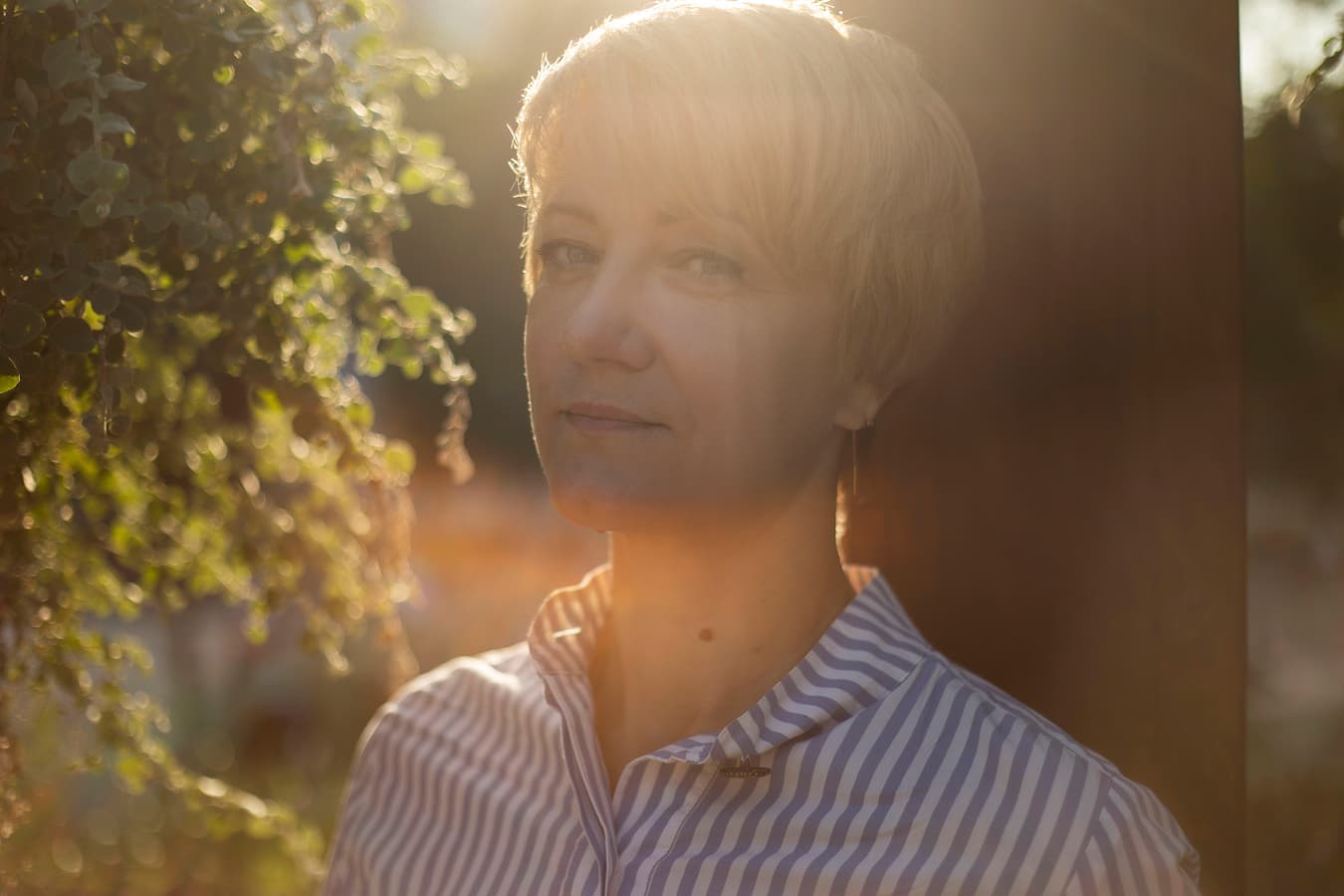
Casting Director Kristina Korshikova
-
– How did you come into this profession?
– By accident, actually. I graduated from directing school, and in 2000 it was a very difficult time. I had moved from another country, got married, and we decided to stay in Kyiv. There was no work in my field, so I started working at a real estate agency. The flexible schedule allowed me to combine it with film shoots. I began acting in small episodic roles, but not very confidently. On set, I met casting director Alena Lastovetska. I can’t say we were close friends, but we often helped each other and kept in touch. I was already realizing that I didn’t want to be an actress. Directors — oh, they’re scary people! (smiles). When they started telling me where to stand, where to look, and what to say, it drove me crazy. I understood that it just wasn’t for me — I wasn’t meant to be an actress. I became interested in working within the crew, but managed to enter this side of the profession only after giving birth to my child. I spent three years on maternity leave, missed work terribly, but didn’t want to go back to the agency. For some reason, I called Alena and asked for any job — as an assistant or a clapper loader — I understood I had to start somewhere. Five months later she called and asked: “Are you ready? It’s a tough project — 60 episodes, six months of filming.” I said, “Yes!” That was “Territory of Beauty”, and I joined as an assistant director on set. It really was tough: we went through summer, autumn, and winter. Towards the end, we were working 15–17 hour days. Indoors it was bearable, but on location, it was freezing cold. Still, I stayed optimistic. Later, I was supposed to move onto another project with Alena, but I was asked to temporarily replace someone on the “Mukhtar” project for two weeks — I filled in and ended up staying for four years. So, I’ve been working in casting since 2009. If you count my time as an assistant, I’ve been in the industry for about 12 years. One must remember: every assistant has the potential to become a casting director. Sometimes I hear stories about assistants crying because actors “take the soul out of them.” I always reassure them: there are smart actors, there are not-so-smart ones, there are simply exhausted ones, and their outbursts should not be taken personally.
-
– Have you experienced anything like that yourself?
– No. When I entered the profession, I was already over 30, not a young girl, so no one dared to act out. Plus, I had a background in choreography — which is equivalent to sports — so my character was strong. I don’t believe in shouting or swearing on set, but I would put my hands on my hips during difficult days with overtime and say: “Alright, my dears, tighten those cheeks and head to the set!” I was lucky: I didn’t work with crazy or aggressive actors, so I could always find common ground. Maybe also because if I made a mistake, I would always admit it.
-
– Do you have a favorite project?
– Almost every project you complete becomes a favorite. You think you’ve survived everything, but each new project turns out to be even harder than the last. I value the people more than the projects themselves. When we worked at ProTV filming “Mukhtar,” we had a fantastic team. We still meet up, call each other, and celebrate birthdays together. Similarly, at Film.UA, where I worked for five years, we had a very close-knit crew that always supported each other.
-
– Have you discovered any actors or actresses?
– It happens all the time. We often visit theaters and student performances; it’s part of our job. Once, my colleague Yana Bernadska and I traveled across cities to search for actors for a project. It was a wonderful experience; we met many talented actors, though sadly we didn’t get to work with all of them. We also share knowledge among colleagues: sometimes I know an actor well, but someone else doesn’t, and vice versa. Sometimes I bring someone in for auditions, and the director says: “Who is this? We’ve never heard of them.” It’s simply because that type wasn’t needed before. And sometimes there are actors I don’t know, despite working in cinema and attending theaters for years. Some actors seem unimpressive at first but reveal themselves in a particular performance. It’s the same in film: you call someone for one role, but then, together with the director, you realize they fit another role even better.
-
– Do you have any fears in your profession?
– It’s not fear — more like anxiety. Every project feels like the first. I always wonder: will I manage, will I find the right actors, will I do a good job? I try to bring different actors for different projects — I’m not a fan of dragging the same people from one film to another. There’s even a certain thrill: will I find the perfect fit or not?
-
– Do you hold closed auditions?
– Yes, I constantly do closed auditions. We still don’t have a dedicated platform for open castings, and actors often lack the proper awareness about the process. I don’t have favorites — sure, there are actors I enjoy working with, but if they don’t fit the role, I won’t call them. I have a base of actors who send me their photos and résumés, whom I know personally or have seen in theaters. Everyone has a chance. I don’t post casting calls on Facebook unless absolutely necessary — like when budgets are low or I need very specific looks. For example, once the director and I were preparing a pitch for a movie and we needed children of Tatar descent. I made a social media post because I simply didn’t have a database for that and the Tatar cultural center was closed for the summer — and we had very little time.
-
– What do you dream about?
– A small house by the sea in Italy. I don’t speak Italian yet, but I know Moldovan, so I believe it won’t be too hard to learn. I would also love to work on children’s projects — fairy tales or movies for teenagers. I feel this area is very underdeveloped in Ukraine: there’s almost no content for teens.
-
– Do you have a favorite film or genre?
– No. It depends on my mood. I enjoy dramas and detective stories. I like comedies too — I love to laugh. Horror films — no, not for me, my nerves are too sensitive. I like rewatching Soviet films; they carry a special energy and bring back a feeling of happiness I had when my parents were alive. When I’m tired, I love action films: someone’s running, shooting, everything explodes, and at the end, there’s a happy ending.
-
– What do you like to read?
– In the past, after finishing a project and having a few weeks off, I would read a lot. During a project, there’s no time for fiction, so lately I don’t read much. Sometimes it feels like, while working on a project, you’re moving through a tunnel with a flashlight — and when you emerge, you realize you’ve aged five years. You don’t see anything except your project — not even your own family.
-
– As a child, what did you dream of becoming?
– I dreamed of being a dancer or a choreographer. From the age of six, I studied folk dance and later enrolled in choreography school. However, after a serious spine injury at 12, I couldn’t handle the physical demands anymore and had to transfer to directing.
-
– Do you have any hobbies?
– If I imagine living in paradise with a month or two off work… I love cooking. I wouldn’t say I create culinary masterpieces, but I enjoy the process and love watching people eat what I prepare. I also love mushroom picking. I adore nature, and the process of finding mushrooms is a form of relaxation for me. A friend once called me a “bloodhound” because even at dusk, I couldn’t stop searching. They would tell me, “You can’t pick the whole forest!” I also love fishing. I used to enjoy sewing — generally, I love creating things: taking a piece of fabric and seeing what comes out of it.