Casting Director Kateryna Dubrovska
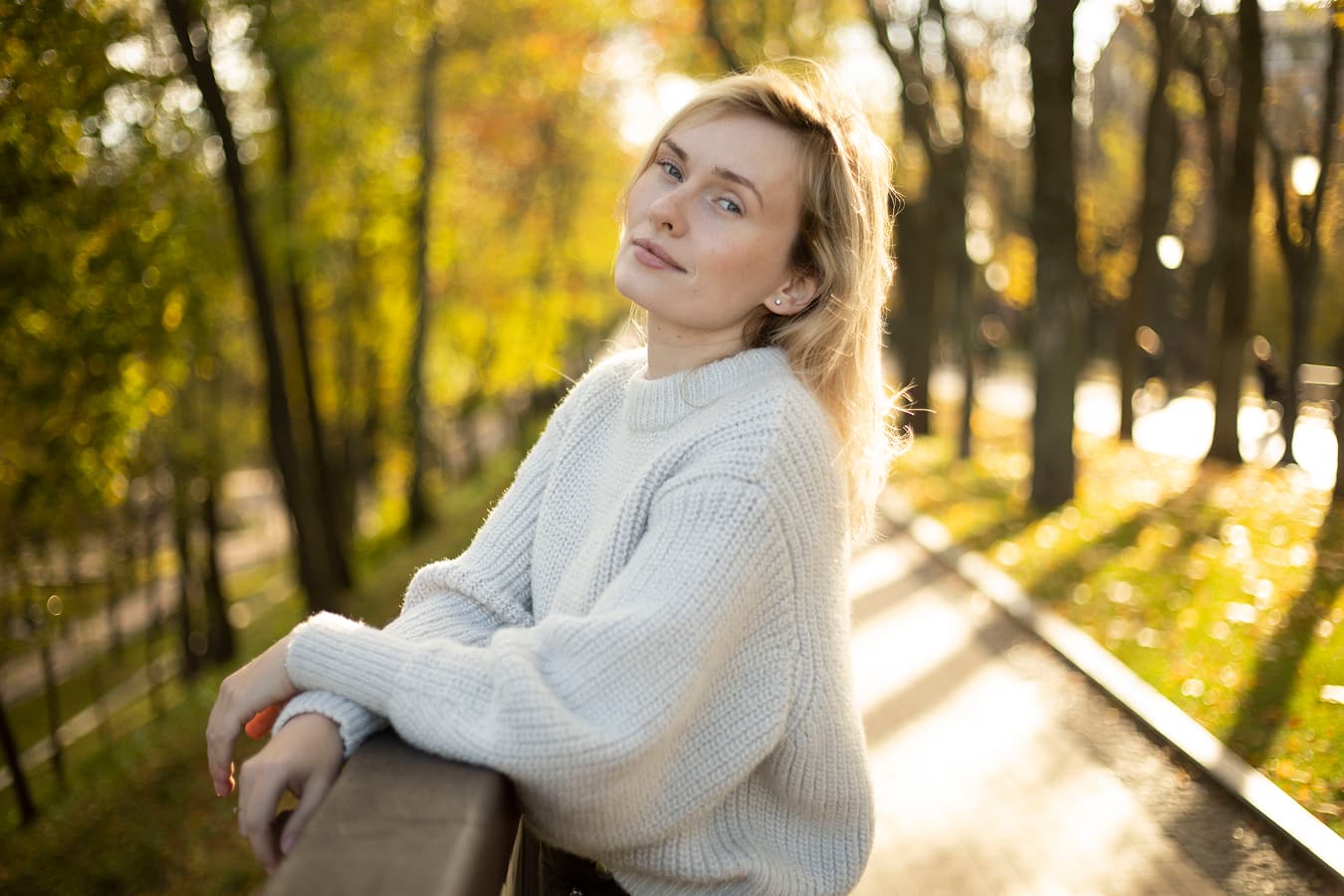
-
– How did you come into this profession, and how long have you been in it?
I’ve been working in film for four years. It happened by chance: an actress I knew was looking for a stage worker in a theater. I joined at first as that, and a week later I was asked to stay on as a stage manager. I launched a production, and soon after, I was offered the position of assistant to the casting director. I worked on one project in that role, and then I was promoted to casting director.
-
– What did you do before that?
You could say I was a housewife. I’m actually trained as an air traffic controller and was looking for work in more technical fields, in IT, because I have a background and a natural inclination for it. But life took a different turn and brought me into the creative world.
-
– Do you have a favorite project so far?
I haven’t worked on that many yet. Most of my time was devoted to the project “Nothing Happens Twice.” It started as 16 episodes and was later extended with another 8. That’s probably my favorite project, because it was my first casting assignment. They threw me — a girl with no experience — into casting all 16 episodes, and I was just trying to stay afloat. It got easier later: for the next 8 episodes, we kept the core cast I had originally chosen.
I went on maternity leave during the second season, and a different casting director took over for the new characters. We spent about a year preparing and shooting those first 16 episodes. We filmed in Batumi, Spain, and Jordan. It was a rich experience, and the end product was something I’m truly proud of.
-
– Have you discovered any actors or actresses?
I work as a casting director for Oksana Bayrak’s studio. Her policy is that we don’t hold in-person castings — actors are selected based on self-tapes. This was already the case before the pandemic. Self-tapes are tricky. Sometimes someone looks great in the video, but when they show up on set — it’s not quite the same.
-
– So how do you handle that?
Actually, we don’t really need to “handle” it. Oksana is a director who knows how to get what she needs from an actor on set. She doesn’t focus on rehearsing the role or watching technique — she observes how a person is in real life. Oksana has a saying: “Break the text down into steps.” When an actor arrives on set and rehearsals begin, they “live through” the role step by step instead of just memorizing lines and repeating them like a robot. She explains what’s happening with the character in each moment, what they feel — helping the actor connect emotionally and deliver a much deeper performance.
-
– Do you have any fears in your profession?
In the early days, I would have nightmares about actors being late, or someone forgetting to approve a role. On “Nothing Happens Twice,” we had many parallel storylines, lots of supporting and background roles. I had to track everything carefully because three or four plots would overlap. There was definitely a fear of missing something. And I tend to be overly responsible — I check and double-check everything: “Wait, did I already confirm this? Better check again!” Just to make sure nothing goes wrong, that everyone — actors and production alike — is satisfied, so the team wants to keep working together and genuinely enjoys the process.
-
– What did you dream of becoming as a child?
A flight attendant. My family has an aviation background. But my father didn’t want me to go into that profession, so he encouraged me to become an air traffic controller instead. Once I started studying at the academy, I really liked it. I did my training at Boryspil Airport. We went on real shifts and worked alongside controllers, guiding planes through the air.
It’s an exciting job — but with massive responsibility. A pilot is responsible for one or maybe two planes. An air traffic controller may be managing up to 50 aircraft in a single airspace. The job is built on strict patterns and protocols. You can’t just say whatever you want over the radio — there are exact phrases you have to use, clear and concise. It’s an amazing field, but unfortunately, that level of responsibility isn’t reflected in salaries or benefits here. Funny enough, a long-term casting job can pay about the same as an air traffic controller’s salary.
-
– Do you have any hobbies?
Right now, all my free time goes to motherhood. But my hobby is photography. I used to take photos and also model for them. That’s on pause for now — the classic “live later” syndrome. I really hope I return to it.
These days, I’m slightly changing direction — doing not just film but also advertising and music videos. So I’m learning and developing further in my profession.
-
– Do you have time to watch movies?
Sometimes, yes, but it’s hard to name a specific favorite right now.
-
– Do you read?
I’d love to read more. Lately, I’ve been diving into psychological literature — books about self-understanding and interacting with others. In our times, it’s especially important to take care of our mental well-being.
-
– What do you dream about?
To go to the sea, finally! Simple dreams that became more important because of lockdowns, restrictions, and daily work. I want to work more because the future is so uncertain — who knows when the next shutdown will come.
I just want to lie in the sun. Travel around Europe. I’m not someone who enjoys museums — I prefer walking through the streets, watching a city live. Observing the architecture without focusing on piles of trash, like in Paris. Some people say, “Paris is so dirty!” — but I didn’t notice. I was looking at the beauty and life of the city. Only when someone pointed it out did I realize it. On a bigger scale, one of my dreams is to visit my homeland — Uzbekistan. I lived in a small town like Boryspil, called Chirchik, near Tashkent. It’s a place of incredible beauty, surrounded by mountains and fresh air.
-
– What advice would you give to actors?
Don’t overact. Acting skills are absolutely essential — that’s the first and foremost thing. But sometimes actors forget their nature and try to fake it instead of being genuine. And in doing so, they lose themselves. The director can’t see the real person anymore, and for a director, that personal connection is crucial. Yes, you need to sharpen your technique, but never forget your inner self — allow your true inner character to come through in your performance.