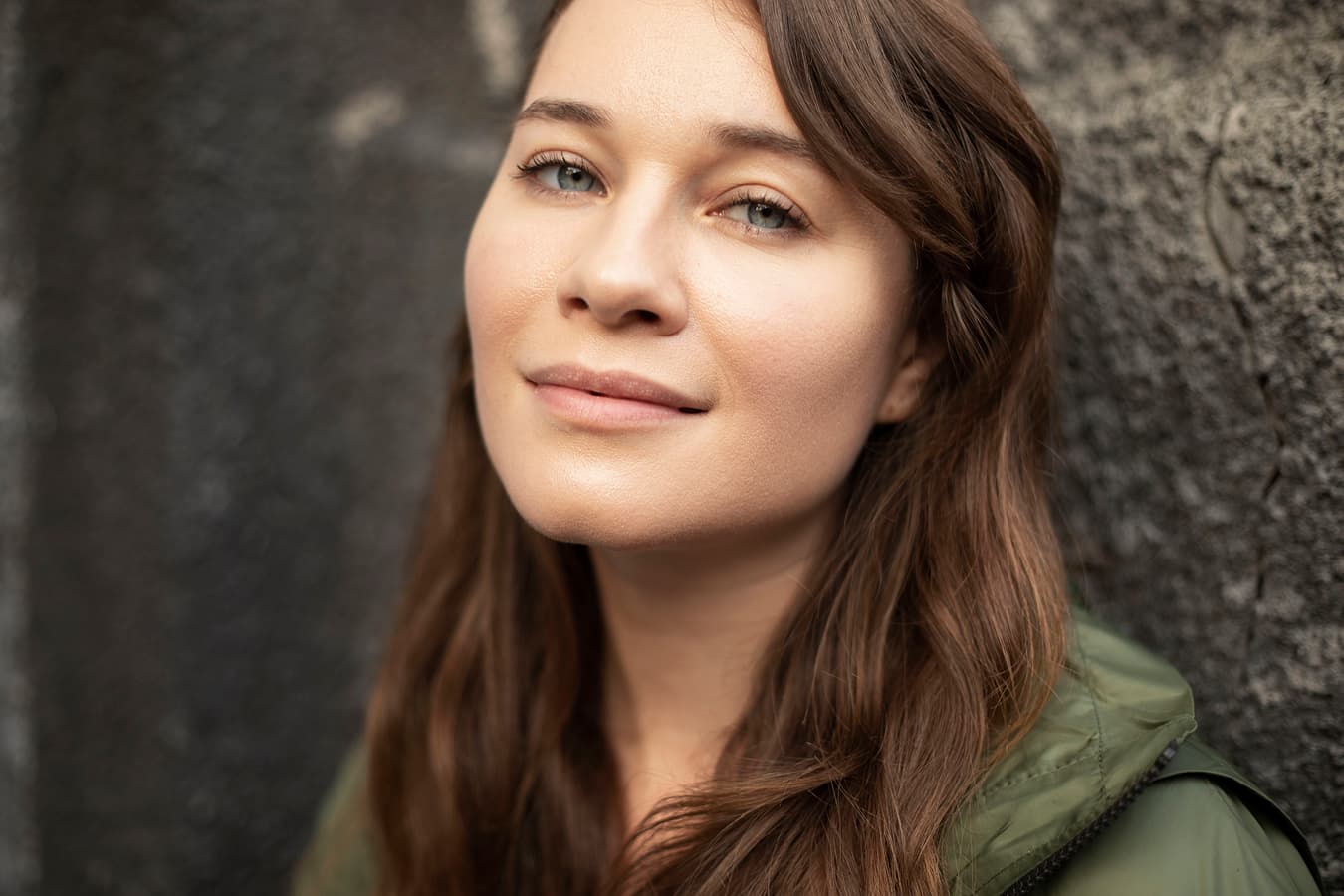
Casting Director Karina Melnychenko
-
– How did you enter the profession, and how long have you been in it?
– It’s been nearly 11 years. I was finishing university, studying sociology and psychology, writing my thesis, and organizing art-house film screenings in Kyiv. It wasn’t very profitable, and naturally, after graduation, I wanted something more serious. My friend Timan suggested I contact production company 2332 and casting director Olya Kuzkina. At that time, I had no idea what casting entailed; I imagined it was like “The X Factor,” where you sit as a judge and choose the winner. Naive (smiles). Two weeks after the interview, Olya called and asked, “Are you ready to come to the shoot tomorrow?” I said, “Ready!” I arrived, and no one explained anything; they just handed me a walkie-talkie and said, “When they say ‘casting,’ respond.” It was a stressful day: I didn’t understand what to do, didn’t even know what catering was, or that you can’t take an actress to the restroom without informing the second director. I didn’t know you can’t feed actors during a two-minute break, etc. But I really liked it. The shoot lasted a full day. I came home happy and realized I wanted to work in this field. Then I received a few more assignments, handled them, and it all took off.
-
– Which production companies have you worked with?
– We have our own casting agency—Easy Casting Agency—which has been operating for two years. Before that, I worked at 2332, Mama Casting, and Papa Casting. I also spent several months at the TET channel but left due to the poor treatment of people and actors. Maybe things have changed now, but nine years ago, it wasn’t the best place for personal development.
At EASY, we mainly conduct castings for commercials, music videos, and short films. Currently, we’re working on our first feature film. Of course, we aspire to do more cinema. In film, we discover actors in a completely different way. In commercials, there’s a high volume of people, and unfortunately, we don’t have time to give each actor more attention. Each casting takes about 10–15 minutes per actor, which isn’t little, considering around 80 people come in a day, and you expend a lot of energy. But we’re not a conveyor belt that shoots one take and sends actors home. In those 10 minutes, we try to reveal the actor as much as possible, doing at least 4–5 takes, reviewing them, and selecting the best.
When casting for music videos and short films, the approach is different. In both, you often need to live a small life in three minutes. Short films are more challenging because there’s usually dialogue, and many of our actors have speech issues. Personally, I dislike when an actor has overly polished speech. It irritates me; I immediately stop the camera and say, “Please speak naturally.” In American and European films, you hear imperfect speech, people mumble, use slang, and various accents. That’s life; that’s authenticity. Plus, speech can add uniqueness to a character. When speech is too refined, it’s dull and unengaging. The actor focuses more on delivery than on the energy needed during the performance.
-
– Have you discovered any actors or actresses?
– Every few months, I discover one or two actors who pleasantly surprise me. Recently, I worked on a short film with Nataliya Kara and Ihor Kovalenko. During auditions, I truly felt what it’s like when people are natural-born actors. I’ve known Nataliya for a long time, and she’s often amazed us with her bold transformations, but this time, we watched her and got goosebumps. The same goes for Ihor Kovalenko. You can watch our work with him in “Kasta – Vyhody huliaty,” and you’ll understand what I mean.
I’m also always pleased by proactive actors who are constantly seeking opportunities. For example, Kyrylo Parastaiev, a young actor who moved from Moscow to conquer Kyiv, not the other way around. Within a month in Kyiv, Kyrylo found a partner and organized a reading at the “Khlam” café in Podil. Another month later, he started his own acting course and gathered several groups. I liked that he’s passionate about his work, invests his time and resources, and doesn’t wait for something from someone else. To me, that’s a sign that a person strives to develop themselves and Kyiv’s cultural life, aiming to help others.
I believe it’s crucial for actors to come together and create something. For instance, the “Akterstvo” theater is amazing. The team creates something new together. We lack a developed acting school, so I rejoice when young actors discover themselves and work on their craft. However, it’s disheartening that we have almost no new strong actors over 35. I understand why—it’s challenging to reinvent oneself at that age, to leave a stable job and pursue acting.
Overall, I think both young and seasoned actors need to gather more often, exchange energy and knowledge. Working with the same people all the time leads to stagnation and burnout. You need fresh emotions and experiences. Step outside your theater and collective, beyond yourself.
A small piece of advice for actors: when recording a video introduction, please avoid going into drama and listing all your film credits. Believe me, that’s boring information. For many directors and casting professionals of the new generation, it’s not important where you’ve acted. What’s important is that you’re interesting to watch. I understand it’s hard to present yourself in two minutes; it’s always an awkward moment, not knowing what to say or how. But it’s essential that your introduction is light, engaging, and free of drama.
-
– Do you have any fears in your profession?
– The biggest fear is burnout. In our work, there are practically no days off. We have an irregular schedule. One day you might think you have a day off, but then something goes wrong: the brief for an actor changes, the actor cancels or changes their hairstyle—and you urgently need to find someone new. You’re always in touch, constantly messaging or calling various people, always searching. Sometimes, you just want a week without communication.
-
- Is that possible?
No (smiles). I try to take breaks, go away for a week without a computer, but it’s only happened once. And it helped a lot: I returned from vacation happy. But there were still some work moments; every day, I spent half an hour to an hour resolving something.
I also understand that each year, more casting directors emerge. It’s competition that pushes you to become better, work more, seek new faces, new approaches, and develop. It’s not exactly a fear of being out of work, but a motivation to stay in shape.
-
- How many actors do you present for a single role?
– It varies. In films, you might present four to five options for a role, whereas in commercials—at least 15–20. Even if you have 33 roles, you still present that many people. Naturally, you need to call each of them and get a response. So, dear actors, always respond to messages with your surname!
-
– What did you dream of being as a child?
– An actress or singer. For the first three to four years of work, I was torn between being an actress or developing as a casting director. Life turned out that I chose the path of a casting director, and at the moment, I feel comfortable in it. But I’m glad I had that potential. I attended courses by Olena Lazovych. I believe she’s a brilliant actress, master, and teacher. I learned a lot from her. Even if I didn’t do everything perfectly as an actress, thanks to her, I saw how actors can and should be revealed. It also helps that I experienced being in their shoes and understand how sometimes it’s hard, cold, and painful—it’s an incredibly tough job.
-
– What are your hobbies?
– My range of hobbies has narrowed, as I have less free time now. But I really love music. I’m a music lover, I collect vinyl records, and sometimes I DJ with them. I also love books. My favorite—though it may sound cliché—is The Master and Margarita. Recently, I read The Sorrows of Satan by Marie Corelli—I highly recommend it. Interestingly, in our local stores, the author is listed as Bram Stoker for some reason. There’s a theory that it was labeled that way to boost sales.
I enjoy shooting film photography, though I’m on a break now—I broke my camera by accidentally dropping it down a hill.
And, of course, I love dancing. Dancing is my personal drug.
-
– What do you dream about?
– Deep down, I still dream of becoming an actress, but I understand it would be difficult now. Acting requires constant practice and self-work. It’s like doing the splits—if you haven’t trained for a year, it’s unlikely you’ll suddenly pull it off. It’s important to feel the flexibility of your mind and body. If you don’t practice it, you start to shut down and move clumsily, like a bear.
I also dream of opening my own café—and just being happy. (smiles)