Casting Director Zhanna Bohdevych
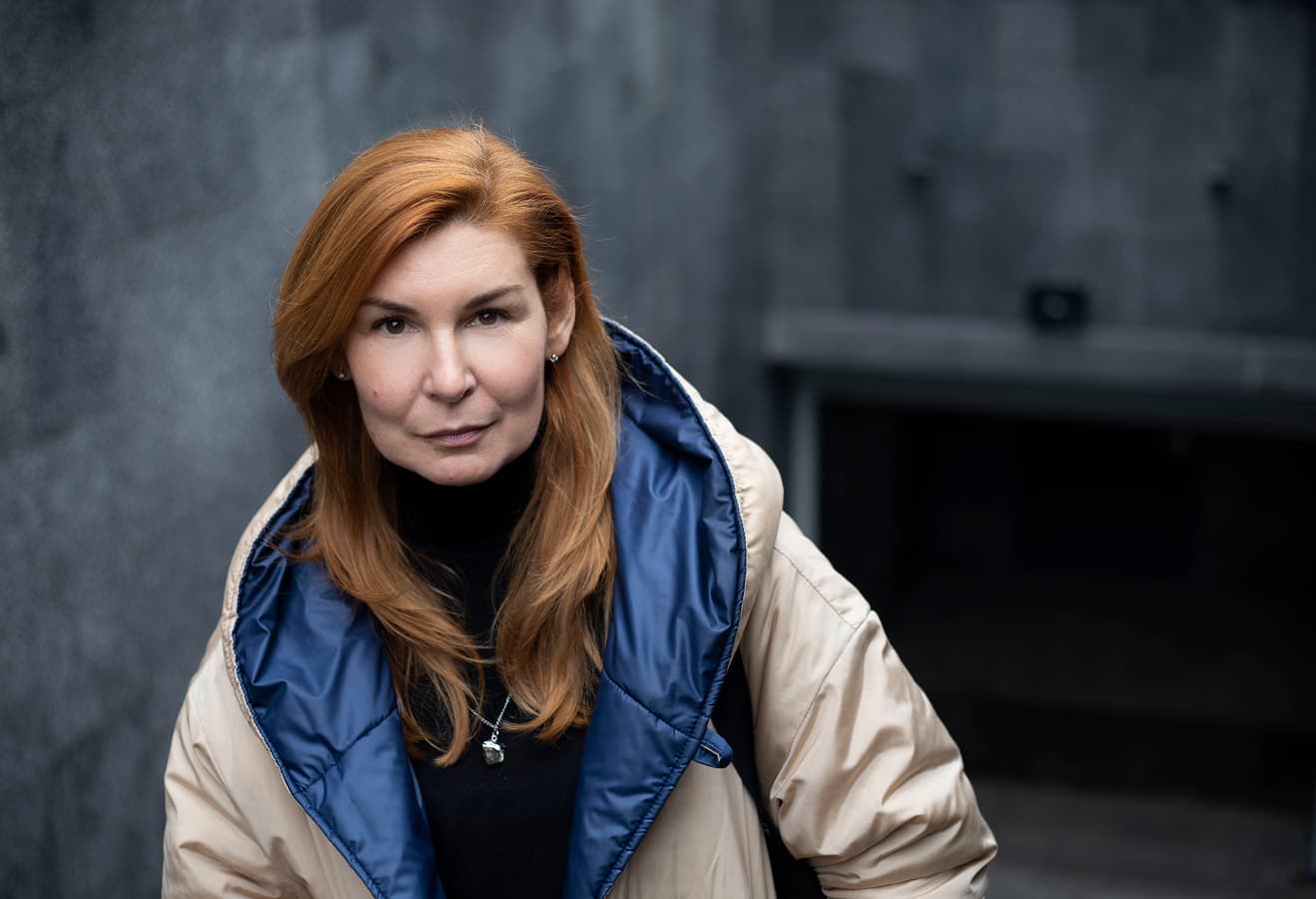
-
– How did you come into this profession, and how long have you been working in it?
– I’ve been directly involved in film since 2007. Before that, I worked for just over three years at the Lesya Ukrainka Theatre. I have an acting diploma — “Actress of drama theatre and cinema.” I even landed a leading role in one of the plays. But the pay in the theatre was very low. It was impossible to make a living.
In 2003, some friends of mine started an advertising agency and production company. They invited me to work as a casting manager. We were shooting commercials and music videos. At the time, the base pay was quite good — $100 a month, plus a separate fee for shoot days.
In 2006, I had my second child, and in 2007, I was offered a job as a casting manager on a joint Ukrainian-Russian feature film “Oh, Lucky Man!” It was an interesting but challenging project.
-
– Do you miss the theatre?
– No.
-
– Do you still get acting offers?
– I do act in films. My favorite and biggest role so far was in the series “Servant of the People.” Before and after that, I had several smaller parts. In February, our studio — Kvartal 95 — released a project called “100,000 Minutes Together.” It’s a family comedy about a couple spending time in quarantine and what comes of it. I played a supporting role — Rusik’s mother, Olena Davydivna. Many viewers saw their own mothers-in-law in her…
I’ll say this right away: I don’t cast myself in roles. There’s a belief that casting directors assign themselves parts. No, not true at all. Everything goes by the book: auditions, director and producer approval.
Comedy is hard to play, but very interesting. The more seriously you approach it, the funnier it is. I started working with Kvartal 95 when they were filming the first season of “Svaty”. Oh, Lucky Man! had just wrapped, and I got the call. That was back in 2008.
-
– Do you have a favorite project among those you’ve worked on as a casting director?
– They’re all interesting… For example, the project “Servant of the People” changed many people’s lives. I’m still not sure whether to be happy or sad about that.
-
– What qualities does the ideal actor have?
– Ideal actors don’t exist. From a casting director’s point of view, the perfect actor is obedient, easy to work with, and not a diva. They can be famous and recognizable but should avoid “celebrity syndrome.” They should be communicative and open to collaboration.
Fortunately, many well-known actors are like that because they’ve come up through the ranks — from tiny parts, under all kinds of conditions: in the rain, in the heat, even when there wasn’t a toilet on set — they’d run into the woods. Studios vary in their financial capabilities… Those actors don’t have time for showing off.
-
– Do you have your own actor database?
– I do. But I still reach out to colleagues because it’s impossible to keep track of everyone all the time.
-
– What does an actor need to do to get into your database?
– Actors write to me via messengers, email, or Telegram. My contact info is available on DreamCast. I pay most attention to showreels. The profile video is less important, but if the reel is old, then a fresh profile video is helpful. Actors change their appearance — men often grow beards now, women change hairstyles and hair color.
-
– Do you hold closed castings?
– We don’t post anything officially on websites. We have a casting directors’ group — about 90 people. When a project starts, we post there. Many casting directors are also agents, so we ask them to update their actor grids. That’s how the information spreads — kind of like a grapevine.
-
– How many actors do you present for a single role?
– Sometimes I just can’t grasp the character. I can’t picture the right actor — no associations come to mind… I’ll go to the director and say: “I don’t feel or understand this character.” And then the director explains what exactly they’re looking for. There have been projects where I proposed only one or two actors. But other times, I showed five — and kept hearing, “not the one.” I’d think, “Oh no, am I even cut out for this?” But often it’s because the director has a very specific image in mind — a 100% match in both psychophysical traits and appearance. Sometimes a two-line character is harder to cast than the lead.
-
– What is your biggest fear in this profession?
– On the eve of the first shooting day, you can’t sleep, you’re shaking. It’s like going on stage in theatre — your heart races. It’s always like that with a new project. It’s your baby — you worry about whether it’ll “survive” and how it will develop.
-
– Do you have any hobbies?
– I love driving. Sometimes I’d just get in the car and drive out of the city, along the highway. I enjoy it most when the roads are empty.
I also enjoy watching series and entertainment shows. Recently, I watched “The Undoing” with Hugh Grant and Nicole Kidman on Netflix. I pick films based on my mood. When I’m sad, I watch something funny to cheer up. When I want to think — psychological thrillers. But in general, I love light French films.
-
– Have you ever been to France?
– No, but I’d love to go! I had plans to visit Sweden, but they fell through because of quarantine.
-
– What were you like as a child?
– Until 8th grade, I went to a regular school. Then a friend told me about a theatrical class and suggested we try getting in. I agreed. That class still exists — in Odessa, at School No. 37. Many of my classmates now work as actors, presenters, DJs, both in Ukraine and abroad.
The curriculum was standard, but instead of vocational training, we had acting skills, stage speech, ethics, and aesthetics — subjects schools didn’t usually offer back then. We also had exams in acting and performed scenes. It was like a mini version of a theatre institute.
After graduation, my friend and I entered the Kyiv State Institute of Theatre Arts named after I.K. Karpenko-Kary, joining the class of M.Yu. Reznikovych. It was a Ukrainian-language class, and we — girls from Odessa — had never spoken Ukrainian before. Our speech apparatus worked differently. Ukrainian requires a different pronunciation of sounds, a different jaw structure. Mykhailo Yuriiovych said: “You need to ‘break’ your speech apparatus.” I thought about it and replied: “Well, let’s break it.”
We had amazing teachers for stage speech and acting technique.
As a child, I also tried to learn piano. I remember sitting on stage with my teacher while she taught me musical notation — and then the curtain opened, and there was an audience in the hall. I was in 4th or 5th grade. I got so scared I told my mom I wouldn’t do it anymore!
-
– Do you have a dream role in film?
– I’ve long said I want to play a role in a good psychological thriller. It doesn’t have to involve murder. That genre can be approached in many different ways.
-
– And in general, what do you dream about?
– Dreaming is scary. You build and build — and it can all collapse in an instant. I release some thoughts into the Universe, but I try not to speak them aloud, I keep them to myself.
I can say I haven’t realized myself 100%. A person fully fulfills themselves only when they’re gone. At this stage, I’m very satisfied with what I do. Our studio creates great, competitive content — I’m not ashamed of it. I’m sure other studios are also making wonderful films and are proud of their work — those are our small victories.
-
– What advice would you give to our actors?
– During our workshops, we told actors: if you don’t get cast, it doesn’t mean you’re a bad actor. It just means the director needed a different type. Don’t give up, don’t get discouraged, don’t self-destruct. Otherwise, you halt your own development. If it didn’t work out — learn from it. It’s not your fault your type doesn’t fit. Your type will be needed — in its own time.
You have to keep “pedaling.” Like an athlete — if they don’t train, they won’t run the 100 meters. An actor has to work on themselves. What does that mean? Watch what other studios are producing, see what new actors and projects are emerging. When I watch films, I also take note of who’s doing what, their reactions, choices. Actors should observe and analyze this. If they weren’t cast — that’s no reason to sit around waiting for a call.
Actors film self-tapes, start YouTube channels. To stay sane, they post monologues. I do watch them. Some send updates like, “I’ve updated my profile video.” The main thing is — don’t stop. Going to the theatre also helps support your mental and physical state. You watch a play — and you start thinking, analyzing. Even a simple visit to a museum is helpful. I do that sometimes too.