Casting Director Viktoria Bobrova
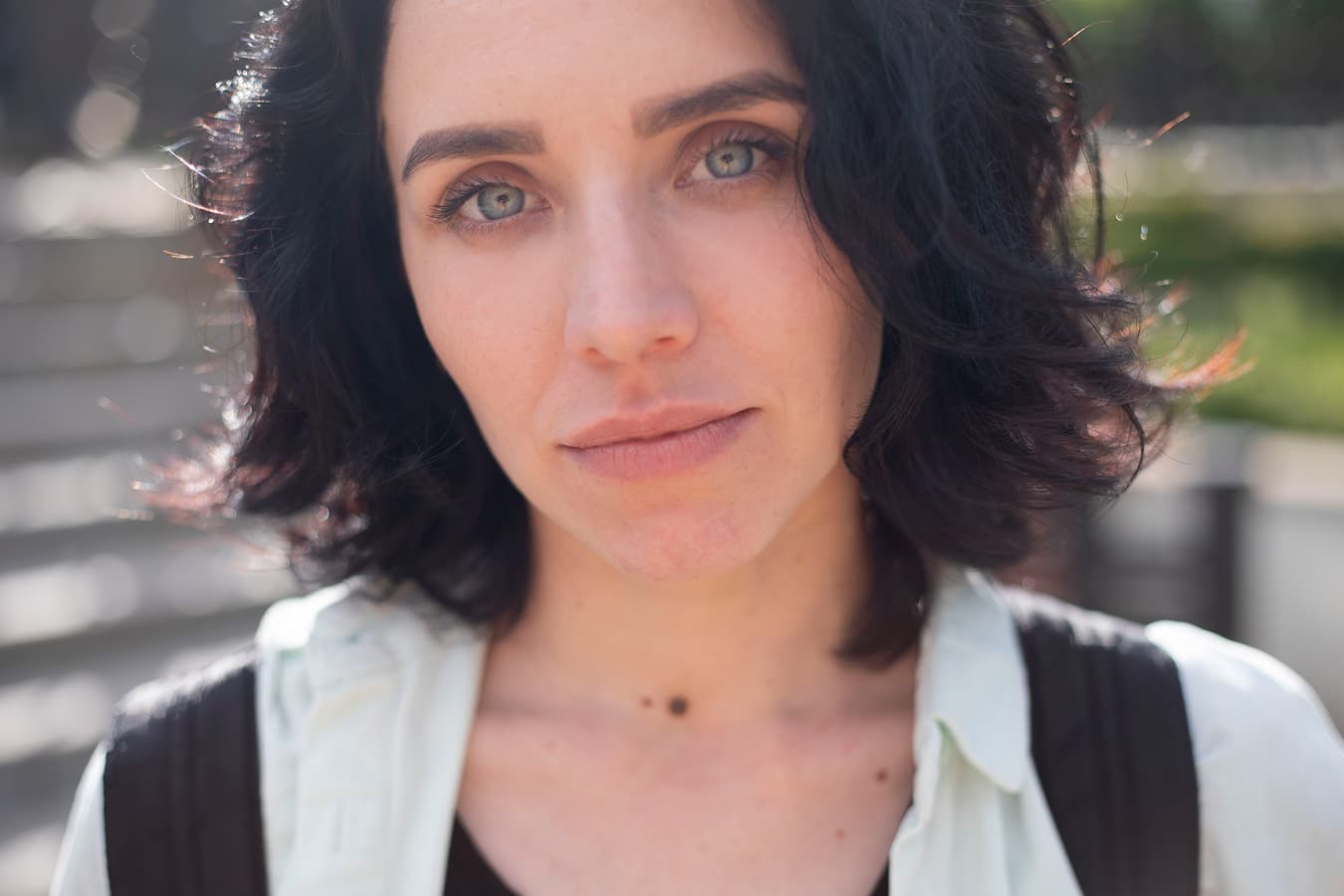
-
- Tell us where you’re from. Where did you study?
- I’m from the city of Izmail, Odesa region. I’ve been singing all my life and even studied at the Odesa College of Arts and Culture named after K.F. Dankevych. When I moved to Kyiv, a friend introduced me to a cool sound producer who creates arrangements and writes songs for many artists in show business. I became a vocalist at a recording studio — we recorded demos for sale and did backing vocals for popular hits. But one day, at the age of 21, I decided to ask myself what I really wanted to do, what I was good at, and what unfulfilled desires I had beyond singing. I realized I wanted to get a higher education. I didn’t really know where to go. My younger brother, who was a student at the University of Culture at the time, suggested I apply there to the program “Variety and Mass Event Directing,” since the stage, concerts, and events were my whole life. I wasn’t exactly a model student — it was a fun student life, and I’m happy I allowed myself to enjoy it for a while. The creative environment made me feel too relaxed, and I started craving something completely different. I transferred to the Karpenko-Kary University of Theatre, Cinema and Television, where I studied “Film and TV Production Management.” This time, I approached my studies seriously and responsibly — no more creative distractions — and I achieved my goal. As soon as I became a student of the production program, I immediately wanted to apply my knowledge in practice; I was eager to understand how things really work on set. One of my classmates, who was working at a production company at the time, told me they were looking for someone. I came for an interview and got the job as an assistant director working with actors. Even though I had no experience, I instantly felt like I was in the right place. It didn’t even feel like “work” — I truly enjoyed every moment. After that, various projects came along where I gained new contacts and skills.
-
- How did you transition from assistant to casting director?
- I worked hard, learned from experienced casting directors I had the chance to collaborate with, developed my skills, observed actors and directors closely, and proved myself. A producer who had known me since my first days in the industry offered me the opportunity to run a casting. At first, it was dream casts for pitching and budgeting, and then one day I realized I was simultaneously working on two feature films: the animated movie Azart based on a comic book, and Double Immelman starring Larysa Rusnak. When you’re the casting director, reading a script forms a visual image in your head of who you see in each role, and you have the ability to suggest actors and be part of the creative team. As an assistant, you don’t have that kind of authority. So while casting directing is more interesting in that way, I still deeply enjoy working with directors on set.
-
- I heard you’re also working as an agent. When did that start?
- I don’t like the word “agent.” I want to be a friend, a helper. For now, I prefer this non-intrusive model of relationships. We help each other in finding the right development path. I’ve only recently taken on this role, but I’ve already started this journey with a few actors.
-
- Do you have criteria for the actors you’d work with as an agent?
- I’m happy to accept anyone who needs me — and whom I need — because I see a part of myself in artists. It’s important that they’re “my kind of person,” someone I’m on the same wavelength with, someone I genuinely want to support. Some actors already have agents, but I still try to be helpful to them when I can, because I believe deeply in their talent.
-
- What are the challenges of being an agent?
- When you really want to help your person (the artist) succeed, it’s important to know what’s happening in the industry, where and when new projects are launching, so you can act fast if the role suits your client. That comes with experience. You have to dive into the true essence of a person to understand what to offer them — not just film roles, but tools for creative self-realization. Based on that, we work on their promotion.
-
- Have you discovered any actors or actresses?
- Larysa Rusnak, a People’s Artist of Ukraine — of course, I didn’t “discover” her, her talent is widely recognized. But for me, the special value was discovering who she is as a person. I’m happy we’re moving in the same direction, and I hope that continues. She teaches me constantly, and I teach her too. As for someone I personally discovered — when I was just starting out and getting to know actors, I discovered Vasyl Kukharskyi during the filming of The Hideouts, where I worked as an assistant to the casting director. Before that, I helped Vika Nesterenko with auditions for the project Blindage (perhaps a working title), where I first met Vasyl. I was feeding lines during the auditions, and his character was terrifying — I got chills because he was so real. In life, he’s the kindest, most radiant person, but in character — a monster. Later, when I read the script for The Hideouts and saw the character “Tsypa,” I felt that same fear and nausea I’d seen before — and immediately remembered his image. I was thrilled when Olena Prylypko, the casting director for The Hideouts, confirmed that Vasyl got the role. That’s when I realized I have that casting “intuition” — I saw the same potential as an experienced casting director.
-
- Have you created your own actor database?
- The database is everywhere. You just need to use the right tools. Social platforms are actor databases too: Instagram, Facebook, Facebook friends, even “friend requests” — that’s a database.
-
- Imagine you caught a goldfish. What three wishes would you make?
- I’d wish for interesting ideas and opportunities to realize them with cool and creative people.
I’d wish for personal fulfillment as a woman: to live in love, to have children, and a cozy private home. My “fairy godmother in casting” — Vika Nesterenko — inspires me so much. When I grow up, I want to be like her (laughs).
And of course — for a healthy and peaceful society.
-
What are your hobbies?
During quarantine, I got into tattooing. I bought a machine and have done about ten tattoos. I also really fell in love with photographing people. I used to write a lot — songs, poems, stage performance concepts, and scripts for theatrical public events.
-
- What do you dream about?
- I dream of finding myself, finding balance. Life can throw you around — in your career, your personal life, your priorities and desires may change — but it’s very important to know how to bring yourself back to a state of comfort. To feel so fulfilled that you want to share with others.
-
- What did you dream of being as a child?
- As a child, I didn’t have much of a choice, because I’d been singing since early childhood and everyone saw only one path for me — show business. But singing was just a form of self-expression. That’s why everyone saw me as a future performer.
-
- How did it happen that you stopped singing?
– I just don’t see potential or a specific niche for myself in that field. But for someone else — I’d gladly produce a music project. I enjoy guiding people more.
-
- Tell us a bit about your childhood.
- Oh. I didn’t have the easiest childhood. There was an unhealthy atmosphere at home (unfortunately, families like that are more common than we think). That’s why I sang so much, painted, and played in the city’s KVN team. It was my way of coping. And now I have ideas for films about domestic violence. The music school was my real home. My vocal teacher at Izmail Children’s Music School #2, Tamara Oleksiivna Hodovanets, was like a second mom to me. My father struggled with alcoholism, and home was often unbearable. But despite everything, thanks to my mother — who worked hard and taught us kindness and understanding — I think my younger brother and I grew up to be good people. At least I hope so. I believe it’s important to stay human, no matter what. My brother is my pride — also very musical and undoubtedly talented. People say being “a good person” isn’t a profession, but it’s exactly with such people that I want to turn the world upside down and make ideas happen.
-
- Tell us more about the casting process: how many actors do you usually submit for a role?
- I’m a very enthusiastic casting director, so I try to propose as many actors as possible for a role. But then the casting becomes more precise and versatile. I love experiments — like taking a dramatic actor and proposing them for a comedic role. I enjoy revealing an actor’s potential in unfamiliar genres. I usually select based on photos and video introductions, but I still prefer live meetings with actors.
-
- What advice would you give to actors?
- Don’t create your own limitations. Always remember: absolutely anything is possible. Don’t wait to be called in for an audition — create your own characters and showcase them! Film yourself — even on a phone — with scenes, emotions, or remakes of movie scenes. It’s like visualizing your desire — it will eventually come true.